Las sanciones de EE.UU. y el fuerte aumento de la mortalidad infantil en Cuba
Cubainformación reproduce en español e inglés impactante estudio del CEPR (Center for Economic and Policy Research) sobre aumento de la tasa de mortalidad infantil de Cuba.
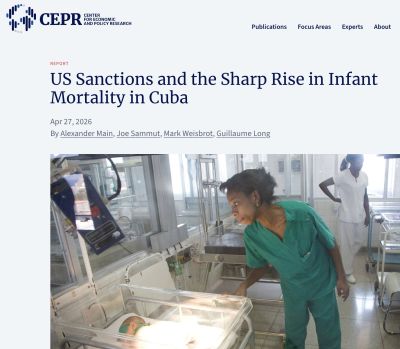
La tasa de mortalidad infantil de Cuba aumentó un 148% de 2019 a 2025 durante un período de expansión y endurecimiento sin precedentes del bloqueo comercial y financiero de EE.UU. contra la isla.
El informe, que les ofrecemos íntegro más abajo, destaca los siguientes elementos.
Principales medidas sancionadoras recientes
Entre las medidas más perjudiciales de los últimos ocho años destacan:
- La Lista de Entidades Restringidas de Cuba, que prohíbe transacciones con numerosos hoteles y empresas estatales.
- La reducción del umbral de minimis al 10 %, limitando exportaciones con contenido estadounidense.
- Restricciones severas a los viajes desde EE.UU. a Cuba, incluyendo la prohibición de cruceros.
- La reincorporación de Cuba a la lista de países patrocinadores del terrorismo.
- La activación del Título III de la Ley Helms-Burton.
- Restricciones a las remesas familiares.
- Sanciones contra misiones médicas cubanas en el exterior.
- Un bloqueo de combustible que ha impedido la llegada de petróleo, especialmente desde Venezuela.
Impacto económico y social
Estas medidas han provocado:
- Caída del turismo en un 53 % entre 2018 y 2024.
- Reducción del 59 % de los ingresos turísticos.
- Descenso del 23 % en exportaciones de servicios médicos.
- Caída del 42 % en remesas.
- Reducción del 30 % en importaciones de bienes.
- Disminución del 13 % de la población entre 2020 y 2024 por emigración masiva.
Las consecuencias sociales incluyen desnutrición, deterioro sanitario, aumento de enfermedades y un incremento de la mortalidad, especialmente infantil.
Impacto en el sistema de salud
Las sanciones han generado escasez de:
- Medicamentos
- Equipos médicos
- Insumos básicos (jeringuillas, soluciones, inhaladores)
Además, la inclusión de Cuba en la lista de países patrocinadores del terrorismo ha dificultado enormemente las transacciones financieras para adquirir estos bienes.
El bloqueo de combustible ha agravado la situación:
- Cortes eléctricos frecuentes afectan incubadoras y respiradores.
- Ambulancias fuera de servicio por falta de combustible.
- Paralización del transporte público.
- Interrupciones en tratamientos médicos.
Evolución reciente
La mortalidad infantil en Cuba pasó de 4,0 en 2019 a 9,9 en 2025. De haberse mantenido estable, se habrían evitado unas 1.800 muertes infantiles.
Mientras tanto, otros países de la región han mantenido o reducido sus tasas.
Conclusión
El informe concluye que el aumento sin precedentes de la mortalidad infantil en Cuba está estrechamente vinculado al endurecimiento de las sanciones estadounidenses desde 2017.
Estas políticas han limitado el acceso a recursos esenciales, deteriorado el sistema sanitario y reducido el nivel de vida de la población.
El actual bloqueo de combustible ha agravado aún más la crisis, y es probable que continúe elevando la mortalidad infantil y deteriorando otros indicadores de salud.
Algunos legisladores estadounidenses han calificado estas medidas como “castigo colectivo cruel” y han propuesto iniciativas para poner fin al bloqueo.
Desde el punto de vista del derecho internacional, el bloqueo naval y las medidas coercitivas podrían considerarse ilegales y contrarias a normas fundamentales, incluyendo la prohibición del uso de la fuerza y del castigo colectivo.
A continuación, en español e inglés, el informe completo.
Las sanciones de EE.UU. y el fuerte aumento de la mortalidad infantil en Cuba
Por Alexander Main, Joe Sammut, Mark Weisbrot, Guillaume Long.
CEPR (Center for Economic and Policy Research)
Traducción: Cubainformación
-
Resumen ejecutivo
-
Un aumento dramático de la mortalidad infantil en Cuba
-
Sanciones y mortalidad infantil: lo que nos dicen estudios recientes
-
El impacto económico y social de la reciente política de EE. UU. hacia Cuba
-
Trump 1.0: una expansión sin precedentes de las sanciones de EE. UU.
-
Efectos en el sector de la salud cubano
-
Trump 2.0: un endurecimiento aún mayor de las sanciones y un bloqueo de combustible
-
Conclusión
-
Referencias
Nuevo informe muestra que el endurecimiento de las sanciones de EE. UU. contra Cuba desde 2017 impulsó un fuerte aumento de la tasa de mortalidad infantil en Cuba.
Resumen ejecutivo
La tasa de mortalidad infantil (TMI) de un país suele considerarse un barómetro clave de la salud general de su población y de su acceso a una atención sanitaria de calidad.[^1] En Cuba, donde durante décadas el Estado ha invertido sustancialmente en servicios de salud, la TMI fue, hasta hace poco, una de las más bajas del hemisferio occidental e incluso inferior a la de Estados Unidos. Sin embargo, desde 2018, la TMI de Cuba ha aumentado de una tasa anual de 4,0 por cada 1.000 nacidos vivos a 9,9 en 2025,[^2] lo que representa un incremento del 148%. Si la tasa de mortalidad infantil se hubiera mantenido sin cambios, aproximadamente 1.800 bebés menos habrían muerto desde 2018.
Este llamativo aumento de la TMI cubana, que contrasta con las tendencias observadas en otros países de la región, se ha producido durante un período (2017-2025) en el que se ha producido una expansión y un endurecimiento sin precedentes del embargo comercial y financiero estadounidense vigente desde principios de la década de 1960. Cabe señalar que, en los años posteriores a la pandemia mundial de COVID-19 y, nuevamente en contraste con casi todos sus vecinos regionales, Cuba no experimentó una recuperación económica sustancial, con un crecimiento medio anual del PIB per cápita del 0,4% entre 2020 y 2024, frente al 3,2% del conjunto de América Latina y el Caribe.[^3]
Estudios recientes muestran una fuerte relación causal entre las sanciones impuestas y el aumento de las tasas de mortalidad. En agosto de 2025, un estudio de The Lancet Global Health estimó, basándose en una regresión de panel con datos de 152 países, que las sanciones amplias y unilaterales provocaron aproximadamente 564.000 muertes anuales entre 2012 y 2021.[^4] El estudio también halló que los niños menores de cinco años representaban el 51% de estas muertes. La mortalidad infantil representa generalmente unas tres cuartas partes de la mortalidad en menores de cinco años. Por lo tanto, estas cifras reflejan una profunda desproporción en el impacto de las sanciones sobre los lactantes y los niños menores de cinco años en comparación con otros grupos de edad; los lactantes representan solo alrededor del 1,6% de la población mundial.[^5]
Las medidas sancionadoras adoptadas por las administraciones estadounidenses desde 2017 están diseñadas para causar daños económicos a Cuba reduciendo aún más su acceso a divisas y a los mercados financieros internacionales; tales medidas pueden, y aparentemente pretenden, provocar recesiones, depresiones, crisis de balanza de pagos y una mayor inflación, incluso hiperinflación — como han hecho sanciones similares en otros países. Un artículo de 2022 publicado por el Banco de Pagos Internacionales (BPI) concluyó que «la mortalidad infantil aumenta de manera muy significativa en las recesiones en las economías de mercado emergentes y en desarrollo (EMED), en unas 6 muertes por cada 1.000 nacimientos».[^6] Nuevamente, estas cifras corresponden a la mortalidad de niños menores de cinco años. Como se mencionó anteriormente, alrededor de tres cuartas partes de esta mortalidad en el mundo es mortalidad infantil, por lo que este estudio implica que una recesión aumentaría la mortalidad en 4,5 muertes por cada 1.000 nacimientos. Esto representa la mayor parte del aumento que muestran los datos para Cuba (de 4,0 a 9,9, es decir, 5,9 muertes adicionales por cada 1.000 nacimientos).
El endurecimiento sin precedentes de las sanciones de EE. UU. contra Cuba durante la primera administración Trump, la decisión de la administración Biden de mantener en gran parte estas políticas, y la posterior ampliación de las sanciones durante la segunda administración Trump, incluido un devastador bloqueo de combustible, es muy probablemente la causa principal de la actual crisis económica y humanitaria en Cuba, que es ampliamente considerada como la peor en la historia contemporánea de la isla.
Entre las medidas más perjudiciales impuestas en los últimos ocho años se encuentran las siguientes:
-
La Lista de Entidades Restringidas de Cuba, que prohíbe las transacciones con la mayoría de los principales hoteles cubanos y muchas otras empresas estatales (creada en 2017 por el presidente Donald Trump).[^7]
-
Reducción del umbral de minimis para Cuba al 10%, bloqueando todas las exportaciones a Cuba de productos fabricados en el extranjero que contengan más de un 10% de contenido de origen estadounidense (se redujo del 25% al 10% en octubre de 2019).
-
Restricciones de gran alcance a los viajes de EE. UU. a Cuba, incluida la eliminación de la principal licencia de viaje que permitía viajar a Cuba a individuos (junio de 2017) y a grupos (junio de 2019; rescindida en 2022, restablecida en 2025) y la prohibición de que cruceros y la mayoría de las embarcaciones/aeronaves privadas hicieran escala en Cuba (junio de 2019).
-
Reinclusión de Cuba en la lista de países patrocinadores del terrorismo (SSOT),[^8] lo que desencadena posibles multas exorbitantes para las instituciones financieras internacionales que negocien con entidades cubanas y bloquea a los ciudadanos de 42 países sujetos al Sistema Electrónico de Autorización de Viaje (ESTA) (UE, Reino Unido, Japón, Australia, Corea del Sur, etc.) la posibilidad de viajar a EE. UU. sin visa si viajan a Cuba (establecido el 12 de enero de 2021).[^9]
-
La no renovación de la exención presidencial del Título III de la Ley Helms-Burton, que permite a ciudadanos y entidades estadounidenses demandar a terceros —incluidas empresas no estadounidenses— que realicen negocios con entidades cubanas que se beneficien de propiedades nacionalizadas (el presidente Trump dejó vencer la exención en mayo de 2019).[^10]
-
Medidas que restringen el flujo de remesas, incluidos topes a las remesas familiares (1.000 dólares por trimestre), la prohibición de todas las remesas donativas (ordenada por el presidente Trump el 9 de septiembre de 2019; eliminada por Biden el 9 de junio de 2022), y la inclusión en 2020 de la empresa cubana que procesa las remesas para Western Union y otras empresas estadounidenses en la lista restringida de Cuba. Las operaciones se reanudaron con un nuevo socio cubano en 2023, pero esta empresa también fue incluida en la lista en enero de 2025, cerrando nuevamente el principal canal de remesas formales y forzando la dependencia de alternativas más costosas.[^11]
-
Sanciones y otras presiones contra funcionarios de gobiernos que albergan misiones médicas internacionales cubanas, lo que ha llevado a la salida de muchas de estas misiones y a la erosión constante de la principal fuente de ingresos externos de Cuba (aplicadas por ambas administraciones Trump).
-
Bloqueo de combustible estadounidense —de lejos la medida unilateral más dañina de EE. UU. hasta la fecha— que consiste en bloquear casi todos los envíos de petróleo desde Venezuela mediante tácticas coercitivas empleadas por el ejército estadounidense, incluida la interceptación de buques tanque con destino a Cuba por parte de la Guardia Costera de EE. UU.,[^12] así como amenazas, incluida la imposición de aranceles a los países que consideren exportar petróleo a Cuba (aplicado por el presidente Trump desde principios de enero de 2026).
En conjunto, estas medidas —al provocar fuertes reducciones de los ingresos por exportaciones de turismo, servicios médicos, inversión extranjera, remesas, etc., y al aislar a Cuba de la mayoría del crédito internacional— han sofocado el crecimiento económico y han contribuido significativamente a las grandes dificultades de balanza de pagos, lo que ha llevado a un aumento de la inflación, una reducción de las importaciones de bienes esenciales y un menor crecimiento económico. Dadas estas condiciones, no es de extrañar que Cuba esté atravesando una aguda crisis económica que ha provocado un importante deterioro del nivel de vida, lo que a su vez ha dado lugar a un número sin precedentes de salidas de la isla en los últimos años. Esta crisis se ha visto agravada por el bloqueo de combustible de este año, que ha provocado apagones cada vez más frecuentes y prolongados y ha paralizado muchos servicios esenciales y actividades económicas.
Si bien aún no se dispone de datos para comenzar a medir el impacto del bloqueo de combustible de este año, las otras medidas sancionadoras citadas anteriormente desempeñaron un papel muy importante, a veces predominante, en los siguientes acontecimientos:
-
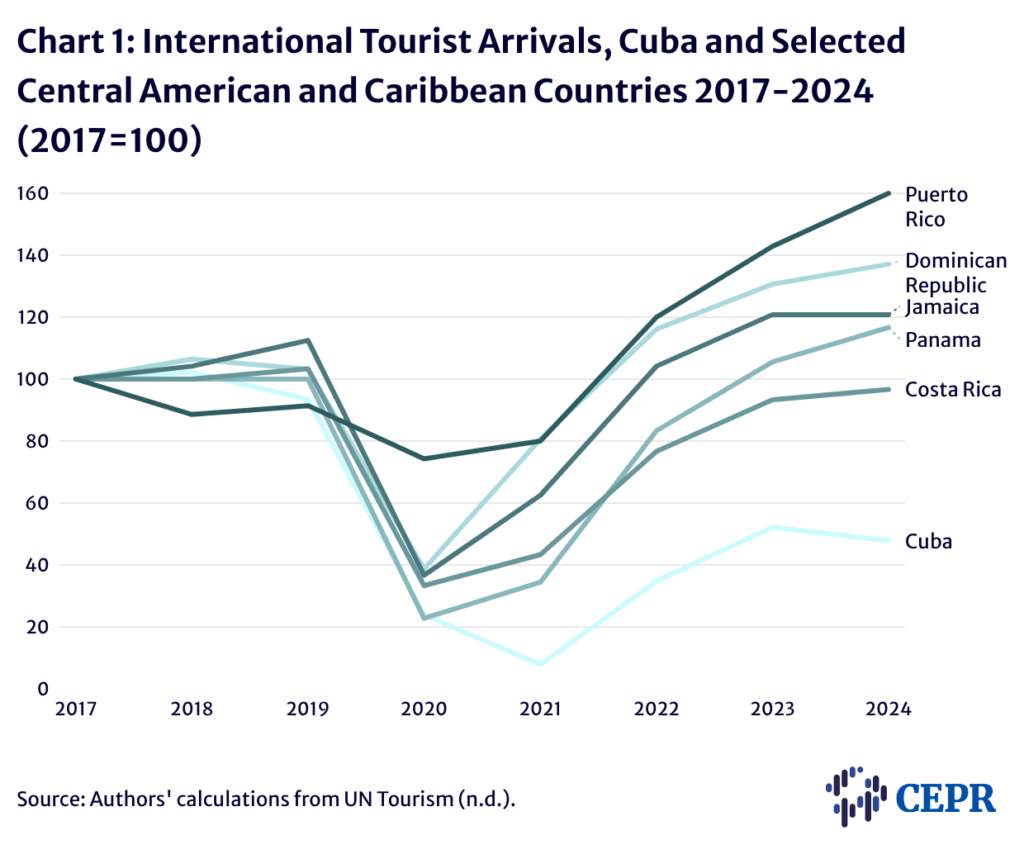
Las llegadas de turistas a Cuba cayeron un 53% entre 2018 y 2024;[^13] los países vecinos con volúmenes de turismo similares experimentaron aumentos en las llegadas o ningún cambio significativo.
-
Los ingresos por turismo cayeron un 59%, pasando de 3.200 millones de dólares en 2017 a 1.300 millones en 2024.[^14]
-
Los ingresos por exportación de servicios médicos (misiones médicas internacionales) cayeron un 23%, pasando de 6.400 millones de dólares en 2018 a unos 4.900 millones en 2022, el último año del que se dispone de datos.[^15]
-
Las remesas cayeron un 42%, de 4.000 millones de dólares en 2018 a solo 2.300 millones en 2024.[^16]
-
El gasto interno en importaciones de bienes cayó de 11.500 millones de dólares en 2018 a 8.100 millones en 2024,[^17] una fuerte caída del 30% (o del 19% en términos per cápita) que probablemente esté subestimada en los datos oficiales.
-
Según la Oficina Nacional de Estadística de Cuba, la población cubana se redujo un 13%, pasando de 11,2 millones en 2020 a 9,8 millones en 2024,[^18] una tasa de emigración que supera con creces todos los episodios anteriores de emigración intensa desde Cuba (como el éxodo de Mariel en 1980).
Estos y otros datos similares reflejan una realidad social y económica en rápido deterioro que ha cobrado un gran precio al pueblo cubano. Las consecuencias humanas de este declive incluyen una desnutrición generalizada, un empeoramiento significativo de las condiciones sanitarias, un aumento de las enfermedades y dolencias y —como se ha subrayado anteriormente— un aumento de las muertes, en particular de los niños lactantes.
El personal del CEPR también ha observado in situ cómo las medidas de sanción estadounidenses han contribuido directamente al deterioro del que fuera un sector sanitario ejemplar en Cuba, lo que sin duda es un factor que ha contribuido al marcado aumento de la TMI cubana. Durante un viaje a Cuba en 2024 para evaluar el impacto del endurecimiento de las sanciones estadounidenses, el CEPR visitó centros sanitarios cubanos y conversó con numerosos proveedores de atención médica. La visita confirmó que, como resultado de la reducción del umbral de minimis en 2019, los importadores médicos cubanos ya no podían obtener a precios asequibles muchos suministros médicos básicos, como jeringas, inhaladores e incluso solución salina; equipos médicos más sofisticados, como sistemas de diagnóstico por imagen y ultrasonido; e insumos para la fabricación de productos farmacéuticos. La redesignación de Cuba como Estado patrocinador del terrorismo en 2021 ha hecho extremadamente difícil obtener financiación para la compra de estos bienes —a cualquier precio— o simplemente ejecutar pagos internacionales para adquirirlos. El resultado final de estas múltiples barreras generadas por las sanciones han sido enormes escaseces de bienes médicos —suministros, equipos, medicamentos— que antes estaban mucho más disponibles a pesar del embargo estadounidense de larga data.
La situación en Cuba se ha deteriorado aún más desde el año pasado y podría degenerar en una crisis humanitaria aún más grave como resultado del bloqueo de combustible estadounidense. Como han señalado varios informes de prensa recientes, el bloqueo ha tenido un efecto particularmente grave en la infraestructura sanitaria cubana, con frecuentes cortes de energía que interrumpen el uso de equipos críticos para el tratamiento de pacientes, incluidas incubadoras para bebés prematuros y ventiladores para ayudar a respirar a los recién nacidos enfermos.[^19] Prácticamente no hay combustible disponible para transportar a los pacientes enfermos, ya sea en ambulancia o en vehículos particulares —NBC informó en marzo de que 300 ambulancias están paradas por falta de combustible o piezas, dejando solo 25 ambulancias eléctricas para atender a toda la isla.[^20] El transporte público está paralizado,[^21] lo que provoca una ausencia aún mayor de trabajadores sanitarios en centros clave.[^22] Nada de esto es sorprendente. De hecho, estas son precisamente las consecuencias que cabría esperar de un bloqueo de combustible dirigido a una nación insular que solo produce aproximadamente el 40% de la energía necesaria para cubrir sus necesidades domésticas.
Dados los efectos del bloqueo energético estadounidense, es muy probable que la tasa de mortalidad infantil de Cuba haya aumentado significativamente desde diciembre de 2025, cuando alcanzó 9,9 por cada 1.000 nacidos vivos. Otros indicadores clave de salud, como la esperanza de vida y la mortalidad materna, también muy probablemente se hayan deteriorado desde principios de año.
Un aumento dramático de la mortalidad infantil en Cuba
La tasa de mortalidad infantil (TMI) de un país —definida como el número de muertes de niños menores de un año por cada 1.000 nacidos vivos— suele considerarse un barómetro clave de la salud general de una población y de su acceso a una atención sanitaria de calidad.[^23] Hasta hace poco, la TMI de Cuba se encontraba entre las más bajas del hemisferio occidental —incluso inferior a la tasa de Estados Unidos— con, por ejemplo, una tasa de 4,3 en 2015 según las autoridades sanitarias cubanas, o 4,8 según las estimaciones del Banco Mundial/ONU, frente a una tasa regional media de 15,6 y una tasa estadounidense de 5,8.
La tasa excepcionalmente baja de Cuba, especialmente para un país que se ha quedado rezagado económicamente con respecto a la mayoría del resto de la región, era atribuible en parte a una importante inversión pública —durante muchos años— en atención sanitaria. Durante décadas, el gobierno cubano ha gastado proporcionalmente más en salud que casi todos sus vecinos regionales. Entre otras cosas, amplió enormemente los servicios de atención primaria preventiva, aumentó el número de centros sanitarios y formó a un gran número de profesionales de la salud, lo que se tradujo en una de las tasas de densidad de médicos más altas del mundo.[^24] Esta sólida y constante inversión en salud explica, al menos en parte, por qué Cuba ha tenido, hasta hace poco, una esperanza de vida media más alta, una mortalidad materna mucho más baja y una mortalidad infantil mucho más baja que el promedio de América Latina y el Caribe (véase la Tabla 1). La Tabla 1 utiliza datos internacionalmente comparables del Banco Mundial para estos indicadores y muestra cómo, en 2017, Cuba tenía resultados superiores a la media regional y a una muestra de sus vecinos.
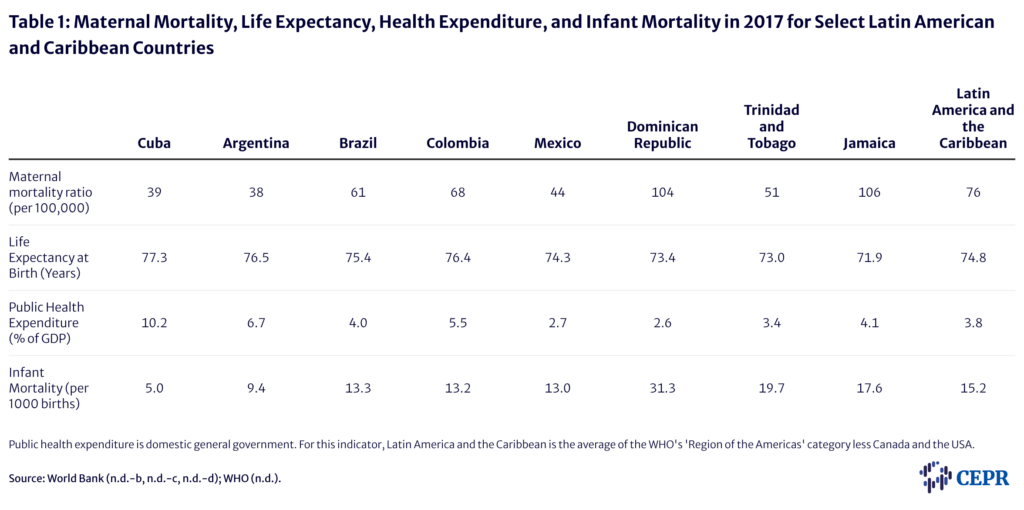
Tabla 1. Indicadores de salud seleccionados, 2017 (o año más cercano disponible)
-
Esperanza de vida al nacer (años): Cuba 79,6; América Latina y Caribe 75,1; Argentina 77,1; Brasil 75,5; Colombia 76,7; Jamaica 74,5; México 74,8.
-
Mortalidad materna (por 100.000 nacidos vivos): Cuba 36; América Latina y Caribe 84; Argentina 39; Brasil 60; Colombia 64; Jamaica 89; México 33.
-
Mortalidad infantil (por 1.000 nacidos vivos): Cuba 4,8; América Latina y Caribe 15,6; Argentina 9,0; Brasil 12,8; Colombia 12,3; Jamaica 13,0; México 12,0.
-
Gasto sanitario público (% del PIB): Cuba 11,3; América Latina y Caribe 3,8; Argentina 5,5; Brasil 4,0; Colombia 5,9; Jamaica 4,0; México 2,9.
-
Médicos (por 1.000 personas): Cuba 8,2; América Latina y Caribe 2,0; Argentina 4,1; Brasil 2,2; Colombia 2,4; Jamaica 0,5; México 2,4.
Fuente: Banco Mundial.
Desde 2019, la TMI de Cuba ha aumentado drásticamente: pasó de una tasa de 4,0 ese año a 9,9 en 2025 (Tabla 2), un incremento del 148%. Si la tasa de mortalidad se hubiera mantenido en su nivel de 2018, aproximadamente 1.800 bebés menos habrían muerto entre 2019 y 2025. Esta es una trayectoria muy diferente a la de otros países de la muestra. De los países que han publicado tasas de mortalidad infantil recientes (Argentina, Brasil, Colombia, México y Jamaica), solo Brasil experimentó un aumento de la tasa, que pasó del 11,9 en 2019 al 12,3 en 2024 (un 3%).[^25] Todos los demás vieron descensos o estancamiento en las tasas.[^26]
Tabla 2. Tasa de mortalidad infantil en Cuba, 2017-2025 (por 1.000 nacidos vivos)
-
2017: 4,2 (ONEI)
-
2018: 4,0 (ONEI)
-
2019: 4,0 (ONEI)
-
2020: 4,0 (ONEI)
-
2021: 5,0 (ONEI)
-
2022: 6,3 (ONEI)
-
2023: 7,6 (ONEI)
-
2024: 8,9 (ONEI)
-
2025: 9,9 (Cubadebate)
Fuente: ONEI (Oficina Nacional de Estadística e Información, Cuba) y Cubadebate.
En la Tabla 2 utilizamos estadísticas oficiales gubernamentales —que, a diferencia de la base de datos del Banco Mundial, proporcionan datos de 2024 y 2025— para ofrecer una imagen del fuerte aumento de la TMI cubana entre 2017 y 2025.
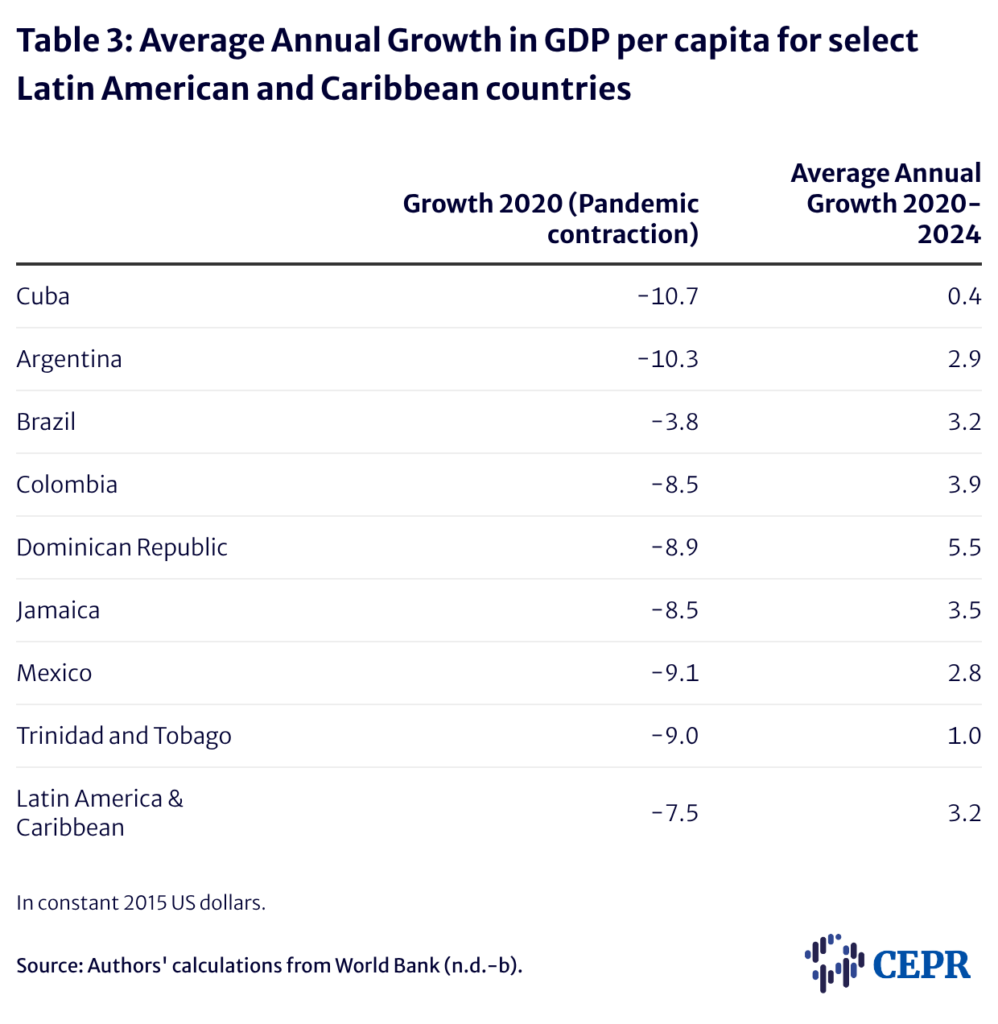
Cabe señalar que, como la mayoría de los países del mundo, la economía cubana sufrió una severa contracción relacionada con la COVID-19; el crecimiento del PIB per cápita fue del -10,7% en 2020, uno de los peores de la región (Tabla 3). Sin embargo, a diferencia de la mayoría de los demás países de la región y del mundo, Cuba no experimentó posteriormente un rebote posterior a la COVID de gran tamaño durante los años inmediatamente siguientes. El crecimiento medio anual del PIB per cápita de 2020 a 2024 fue de solo el 0,4%, en comparación con el promedio regional del 3,2%. Durante este período, la calidad de la atención sanitaria y el acceso a los servicios de salud en Cuba se deterioraron considerablemente en medio de una escasez generalizada de medicamentos y suministros médicos y de la salida de muchos profesionales de la salud.
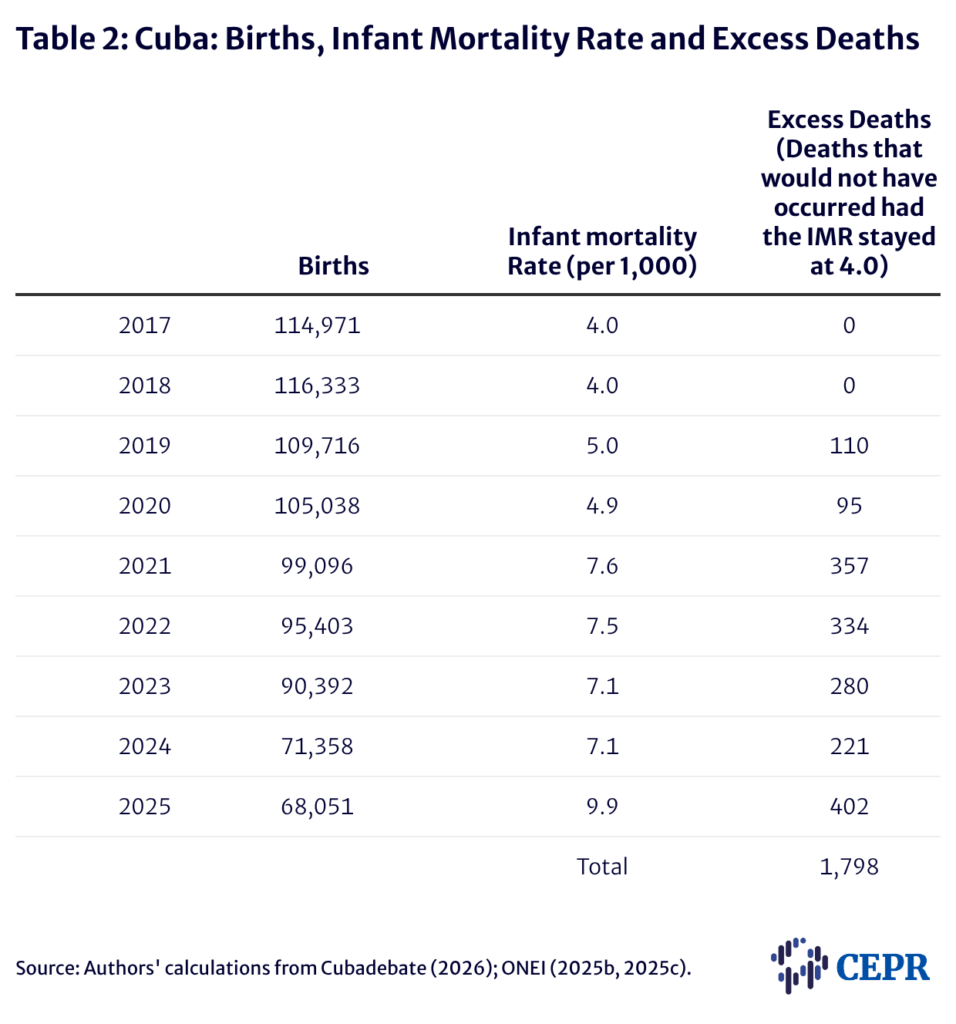
Tabla 3. Crecimiento anual del PIB per cápita (%), 2019-2024
-
*[Se muestran comparativos: Cuba vs. América Latina y el Caribe; en 2020 Cuba -10,7%; rebote posterior muy bajo]*
En la primavera de 2024, el personal del CEPR visitó centros sanitarios en Cuba y observó de primera mano algunos de los crecientes desafíos que enfrentaba el sector de la salud. Había escasez de suministros médicos básicos y críticos, como jeringas, inhaladores e incluso solución salina. En un centro cardiológico para niños, observamos a un niño pequeño que necesitaba someterse a una operación quirúrgica que habría sido evitable si el centro hubiera tenido acceso a catéteres. Conocimos a un joven médico que lamentaba ser el único graduado de su promoción que aún ejercía la medicina en Cuba, y atribuía esto a los menguantes salarios de los médicos. En el Instituto Nacional de Oncología nos enteramos de que el personal médico tenía grandes dificultades para obtener productos químicos básicos de laboratorio y no podía acceder a repuestos para los equipos de radioterapia; como resultado, no podían tratar a muchos pacientes con cáncer de manera oportuna. El instituto contaba una vez con un total de 60 físicos médicos (especializados en tratamiento del cáncer) y ahora solo tenía 16. Antes tenían 16 anestesiólogos y ahora solo cinco.
Desde entonces, los informes indican que la situación en el sector sanitario cubano ha empeorado mucho. Debido a un aumento continuo de la escasez de combustible y los apagones eléctricos en toda Cuba, muchos hospitales no han podido brindar servicios críticos y todas las cirugías, excepto las vitales, se han suspendido. Las ambulancias a menudo no están disponibles para la atención de urgencia por falta de suficiente combustible. Los proveedores médicos en clínicas pediátricas han informado que tienen que desconectar a los niños pequeños de los ventiladores durante los cortes de energía y bombear aire manualmente a sus pulmones para intentar mantenerlos con vida.[^27]
El impacto directo e indirecto del endurecimiento de las sanciones estadounidenses contra Cuba que comenzó en 2017 muy probablemente desempeñó un papel sustancial en el enorme aumento de la tasa de mortalidad infantil en Cuba.
Sanciones y mortalidad infantil: lo que nos dicen estudios recientes
En la última década, Cuba ha sido sometida a un aumento dramático en el alcance e intensidad de las sanciones impuestas por Estados Unidos. Cabría esperar que los efectos negativos resultantes sobre la economía cubana, que analizaremos con más detalle en la siguiente sección, condujeran a un aumento de la mortalidad. También hay considerable evidencia empírica y estadística de que las sanciones económicas del tipo impuesto e intensificado en Cuba en la última década pueden causar aumentos sustanciales en las muertes en los países objetivo.
Más recientemente, un estudio de agosto de 2025 para The Lancet Global Health de los economistas Francisco Rodríguez, Silvio Rendón y Mark Weisbrot estimó que las sanciones amplias y unilaterales —impuestas en su mayoría por Estados Unidos— aumentaron las muertes en los países sancionados en aproximadamente 564.000 anuales, basándose en una regresión de panel que incluye 152 países.[^28] Esta cifra es comparable a las muertes anuales en todo el mundo por conflictos armados.[^29]
Este estudio incorporó varios métodos estadísticos para demostrar la relación causal entre las sanciones impuestas y el aumento de las tasas de mortalidad resultantes.[^30]
El estudio de The Lancet Global Health halló que los niños menores de cinco años representaban el 51% de las muertes causadas por estas sanciones. La mortalidad infantil representa generalmente unas tres cuartas partes de la mortalidad en menores de cinco años. Por lo tanto, estas cifras indican una profunda desproporción en el impacto de las sanciones sobre los lactantes en comparación con otros grupos de edad; los lactantes representan solo alrededor del 1,6% de la población mundial.[^31]
Esto indicaría que un aumento de la mortalidad infantil de la magnitud que ha tenido lugar en Cuba en la última década —o incluso mayor— podría esperarse en las condiciones que Cuba experimentó durante ese período. Existe otra evidencia estadística convincente que también indicaría firmemente que las sanciones a las que ha sido sometida Cuba causarían un aumento sustancial de la mortalidad infantil. Parte de esta evidencia se encuentra en otro estudio basado en regresiones de panel y publicado por el Banco de Pagos Internacionales (BPI). Este estudio abarca 180 países y examina la relación entre las recesiones y la mortalidad en las economías de mercado emergentes y en desarrollo (EMED).[^32]
Estos resultados son directamente relevantes para la relación entre sanciones y mortalidad. Esto se debe en parte a que las desaceleraciones económicas, las recesiones, las depresiones e incluso la hiperinflación —que suele ser económicamente devastadora— se encuentran entre los tipos más importantes de daños económicos derivados de las sanciones que aumentan las tasas de mortalidad. En una de las experiencias de sanciones mejor documentadas, Venezuela perdió el 74% de su PIB entre 2012 y 2020,[^33] más de tres veces la contracción de la economía estadounidense durante la Gran Depresión. La mayor parte de esto se debió a las sanciones económicas. El primer año de las sanciones de la administración Trump a Venezuela (2017-18) vio un aumento de 40.000 muertes,[^34] con muchas más en los años siguientes.
Cortar a un país del acceso a la mayoría de los mercados financieros internacionales, incluidos los niveles normales de endeudamiento, podría provocar recesiones. Las crisis fiscales y de deuda, las crisis de balanza de pagos y la pérdida de importaciones esenciales necesarias para la producción y el mantenimiento de la infraestructura crítica a menudo siguen a la pérdida del acceso financiero. Las restricciones directas a las importaciones desempeñan un papel similar en el daño a la economía; en el caso de Cuba, esto se ha visto más agudamente tras el bloqueo casi total del petróleo impuesto por la administración Trump en los últimos meses. Las restricciones a las exportaciones y a las remesas también pueden contribuir a las recesiones y a las crisis de balanza de pagos.
Estas formas en que las sanciones causan y empeoran las recesiones y crisis significan que también provocarán mayores niveles de mortalidad a través de este impacto económico. Por lo tanto, la relación estadística entre recesiones y mortalidad proporciona evidencia estadística importante para el impacto de las sanciones en la mortalidad.
Los economistas del BPI hallaron que «la mortalidad infantil aumenta de manera muy significativa en las recesiones en las EMED, en unas 6 muertes por cada 1.000 nacimientos».[^35] Los autores del documento del BPI definen una recesión para un país como un año en el que la economía tiene crecimiento negativo.
Nuevamente, estas cifras corresponden a la mortalidad de niños menores de cinco años. Como se mencionó anteriormente, alrededor de tres cuartas partes de esta mortalidad en el mundo es mortalidad infantil, por lo que este estudio implica que una recesión aumentaría la mortalidad en 4,5 muertes por cada 1.000 nacimientos. Esto representa la mayor parte del aumento que muestran los datos para Cuba (de 4,0 a 9,9, es decir, 5,9 muertes por cada 1.000 nacimientos) (véase la Tabla 2).
Por supuesto, hay un impacto letal considerable de las sanciones en Cuba que no se produce a través del impacto de las recesiones: la falta de acceso a medicamentos y suministros médicos; la interrupción de la atención que depende de la electricidad o el combustible para el transporte; fallos en el agua, el saneamiento y la higiene; y la pérdida de capacidad de reparación o de repuestos. El control de mosquitos, la atención prenatal, las campañas de vacunación y muchas otras medidas de salud pública pueden verse gravemente debilitadas por el impacto directo de las sanciones, haya o no recesión.[^36]
Cabe señalar que la relación causal entre las sanciones infligidas a Cuba y el aumento de la mortalidad infantil es bastante clara a partir de la evidencia física, médica y de otro tipo observable —gran parte de la cual se describe a continuación. Los estudios estadísticos, incluidas las regresiones de panel aquí citadas, proporcionan evidencia cuantitativa, empírica y replicable adicional de la magnitud de las muertes y los daños causados por esta violencia económica, que se ha estado acelerando en Cuba durante la última década.
El impacto económico y social de la reciente política de EE.UU. hacia Cuba
Estados Unidos ha mantenido un extenso embargo económico contra Cuba desde principios de la década de 1960.[^37] Si bien los efectos de este embargo se sintieron ampliamente en la isla, durante décadas fueron en gran parte compensados por el acceso comercial preferencial, el crédito en condiciones favorables y los subsidios de la Unión Soviética.[^38] El shock causado por la terminación del apoyo económico soviético a Cuba a principios de la década de 1990 condujo a una profunda y prolongada recesión económica.
En los años siguientes, el régimen de sanciones de EE. UU. contra Cuba se intensificó y se hizo más difícil de eliminar mediante la aprobación de dos leyes clave. La Ley de Democracia Cubana de 1992 (o Ley Torricelli) bloqueó la ayuda estadounidense a cualquier país que brindara «asistencia» al gobierno de Cuba, prohibió a las filiales extranjeras de empresas estadounidenses comerciar con Cuba y prohibió que cualquier barco que hiciera escala en Cuba atracara en EE. UU. durante los 180 días siguientes.[^39] La Ley LIBERTAD (o Helms-Burton) de 1996 codificó el embargo estadounidense vigente, que había sido impuesto principalmente por acción ejecutiva, en la ley estadounidense y, a través del Título III de la Ley, incluyó efectos extraterritoriales al crear responsabilidad potencial tanto para empresas estadounidenses como extranjeras que realizaran negocios con entidades cubanas. En respuesta a la fuerte oposición de otros países, especialmente en Europa, el presidente Bill Clinton y todos los presidentes estadounidenses posteriores bloquearon la aplicación del Título III hasta que, en 2019, el presidente Donald Trump cambió de rumbo y permitió su aplicación.[^40]
El régimen de sanciones comenzó a flexibilizarse en la década de 2000, un cambio que se aceleró con la política de normalización progresiva de las relaciones con Cuba de la administración Obama, anunciada en diciembre de 2014. En los meses siguientes, EE. UU. restableció las relaciones diplomáticas; eliminó a Cuba de la lista de países patrocinadores del terrorismo; suavizó las restricciones a los viajes y las remesas; y flexibilizó las restricciones a las exportaciones, importaciones y transacciones financieras. Por ejemplo, las exportaciones de fabricación extranjera a Cuba desde países terceros estaban sujetas a los controles de exportación de EE. UU. si más del 10% de su contenido en valor era de origen estadounidense (la regla de minimis).[^41] El presidente Barack Obama elevó este umbral al 25%. Sin embargo, en parte debido a la Ley Helms-Burton, el embargo estadounidense de décadas de antigüedad se mantuvo en gran medida.
Trump 1.0: una expansión sin precedentes de las sanciones de EE. UU.
Después de asumir el cargo en 2017, el presidente Trump comenzó a revertir aspectos clave de la política de normalización de Obama y añadió progresivamente nuevas medidas restrictivas, lo que condujo al régimen de sanciones más severo que Cuba había enfrentado hasta entonces. En primer lugar, un memorando presidencial de 2017 creó lo que se conocería como la Lista de Entidades Restringidas de Cuba, que identificaba entidades cubanas para las que se prohibían todas las transacciones financieras «directas o indirectas».[^42] Se ampliaría repetidamente en los años siguientes, y muchas de las entidades sancionadas estaban vinculadas al vital sector turístico cubano, incluidos la mayoría de los principales hoteles.[^43] En 2019, el umbral de minimis se redujo de nuevo al 10%, limitando significativamente el acceso de Cuba a muchos bienes importados. Los viajes se restringieron aún más con la eliminación en 2019 de una licencia general de la Oficina de Control de Activos Extranjeros (OFAC) para viajes educativos «de persona a persona» —lo que resultó en una disminución abrupta del turismo estadounidense a la isla y el fin de todos los viajes de cruceros a ese país— y la suspensión de los vuelos chárter desde EE. UU. en 2020.[^44] Varias restricciones a las remesas culminaron con Western Union, la única entidad estadounidense autorizada a gestionar los flujos de remesas privadas, viéndose obligada a cerrar sus operaciones en Cuba en 2020.[^45]
Potencialmente, las dos medidas sancionadoras más perjudiciales fueron el levantamiento de la suspensión del Título III de la Ley Helms-Burton en mayo de 2019 y la redesignación de Cuba como Estado patrocinador del terrorismo (SSOT) en 2021, justo antes de que el presidente Trump abandonara el cargo.
El Título III faculta a los ciudadanos y entidades estadounidenses (incluidos los ciudadanos que eran cubanos en el momento de la nacionalización) a demandar a terceros individuos y empresas que hayan «traficado» con propiedades nacionalizadas después de la revolución. Si bien se han presentado relativamente pocos casos desde 2019 —aunque actualmente hay dos casos ante el Tribunal Supremo[^46]—, el Título III aumenta los riesgos de invertir y comerciar con empresas cubanas y, según se informa, ha tenido un importante efecto disuasorio al desalentar posibles inversiones y asociaciones comerciales de todo el mundo.[^47]
La reinclusión de Cuba en la lista SSOT a principios de 2021 causó una amplia interrupción, ya que las empresas reacias al riesgo cerraron sus operaciones en Cuba.[^48] Muchas instituciones financieras internacionales, que ya eran reacias a relacionarse con Cuba debido a las recientes multas multimillonarias contra bancos que violaron sanciones, dejaron de procesar transacciones con entidades y particulares cubanos.[^49] Según el gobierno cubano, entre agosto de 2021 y febrero de 2022, «se identificó a un total de 100 bancos extranjeros involucrados en 261 acciones» que incluían «el cierre de cuentas y contratos bancarios establecidos, la devolución de transacciones, la negativa a crear cuentas» y «la cancelación de contraseñas para el intercambio de información financiera» a través de SWIFT.[^50] Incluso las empresas que realizan transacciones permitidas por la ley estadounidense, como las dedicadas a la exportación de alimentos a Cuba, pueden esperar un mayor escrutinio por parte de la Comisión de Bolsa y Valores de EE. UU. debido a la designación. Muchas empresas prefieren evitar los posibles obstáculos burocráticos que encontrarían si continuaran trabajando con entidades cubanas, incluso si hacerlo fuera totalmente legal según la ley estadounidense.[^51]
La designación de Cuba como SSOT también ha tenido un gran impacto en los viajes a Cuba. Con la designación vigente, los ciudadanos extranjeros de los 42 países que califican para viajar sin visa a EE. UU. —a través del Sistema Electrónico de Autorización de Viaje (ESTA) estadounidense— deben solicitar visas estadounidenses si viajan a Cuba. Este requisito disuade los viajes de turismo y negocios desde países con ESTA, incluidos la mayoría de los países europeos, el Reino Unido, Japón, Australia, Chile, Nueva Zelanda, Taiwán, Corea del Sur y Catar, entre otros. Esta medida, junto con el aumento de las restricciones a los viajes de EE. UU. a Cuba, perjudicó gravemente la capacidad de Cuba para recuperarse del shock de la COVID-19, que había diezmado el número de llegadas de turistas y provocado una caída proporcional de los ingresos turísticos, una de las principales fuentes de ingresos externos del país.[^52]
Las exportaciones de servicios de salud a través de «misiones» médicas internacionales han sido otro objetivo clave de las sanciones estadounidenses en los últimos años. Importantes aliados de la administración Trump, el Brasil del presidente Jair Bolsonaro y El Salvador del presidente Nayib Bukele, pusieron fin a sus programas de cooperación médica con Cuba a finales de 2018 y en abril de 2019, respectivamente.[^53] A partir de julio de 2019, EE. UU. comenzó a imponer restricciones de visa a funcionarios extranjeros involucrados en los programas.[^54] El Departamento de Estado de EE. UU. emitió un comunicado en septiembre de 2019 instando a todos los países a dejar de utilizar las misiones médicas cubanas.[^55] Posteriormente, los gobiernos de Ecuador y Bolivia también pusieron fin a sus misiones.[^56] Al comenzar la pandemia, los senadores Marco Rubio y Bob Menéndez pidieron al Departamento de Estado que diera instrucciones a las embajadas para alentar a los gobiernos a retirarse de estos programas.[^57] El secretario de Estado de EE. UU., Mike Pompeo, también presionó a la Organización Panamericana de la Salud para que investigara lo que calificó como «trata de esclavos con médicos» por parte de Cuba.[^58]
La intimidación de estas misiones médicas por parte del gobierno estadounidense no solo causa daños a Cuba. Las misiones están dirigidas a sectores económica y socialmente desfavorecidos y marginados de las poblaciones de países mayoritariamente más pobres, y las tarifas se basan en precios solidarios, y algunos países reciben la ayuda como donaciones.[^59] El trabajo de las misiones en África occidental durante la crisis del Ébola fue particularmente elogiado, incluso por el entonces jefe de la Organización Mundial de la Salud (OMS) y por altos cargos de la administración Obama.[^60] Este comercio mutuamente beneficioso ha sido una contribución importante a los ingresos en divisas de Cuba, y los ataques a los programas por parte de la primera administración Trump se pueden observar en los datos: las exportaciones de servicios médicos cayeron de 6.400 millones de dólares en 2018[^61] a poco menos de 4.000 millones en 2020.[^62]
Los ingresos por turismo cayeron de 3.300 millones de dólares en 2017 a 2.600 millones en 2019,[^63] y luego cayeron drásticamente durante la pandemia a poco más de 400 millones en 2021, pero para 2024 solo se habían recuperado a 1.300 millones de dólares —apenas el 40% de su nivel de 2017.[^64]
En el Gráfico 1, podemos ver cómo, entre 2018 y 2024, el número de visitantes extranjeros a Cuba ha disminuido drásticamente tanto en términos absolutos como en relación con los países vecinos cuyas economías también dependen en gran medida de los ingresos del turismo. De recibir 4,6 millones de turistas internacionales en 2017 y 4,7 millones en 2018, las llegadas de turistas a Cuba cayeron bruscamente durante la pandemia y solo se habían recuperado parcialmente en 2024, con 2,2 millones de turistas llegados ese año.[^65]
Las remesas, que son uno de los principales canales de financiación para el sector privado,[^66] se restringieron mediante topes, restricciones a los destinatarios y la inclusión de la principal empresa cubana de procesamiento de remesas en la Lista de Entidades Restringidas de Cuba del Departamento de Estado en junio de 2020.[^67] Esta última inclusión tuvo el efecto de forzar a Western Union a salir del mercado cubano, complicando enormemente el envío de remesas a la isla, provocando un desvío hacia canales informales y más costosos.[^68] Los costos de transacción de otras agencias de remesas en Miami alcanzaron supuestamente hasta el 40% después del cierre de Western Union (que cobraba comisiones de aproximadamente el 11%).[^69] Las remesas alcanzaron su punto máximo en poco más de 4.000 millones de dólares en 2018; luego cayeron a 2.800 millones en 2020 y a solo 1.800 millones en 2022.[^70] Las remesas se recuperaron parcialmente —probablemente atribuible a las acciones tomadas por la administración Biden— a 2.300 millones en 2024.[^71]
Un indicador aproximado del declive económico desde 2018 puede verse en los niveles de importación, cuyos cambios pueden sugerir cambios en los niveles de demanda interna y, por implicación, en el poder adquisitivo. Las importaciones de bienes cayeron[^72] sustancialmente de 11.500 millones de dólares en 2018 a 8.100 millones en 2024, una caída de casi el 30% o del 19% en términos per cápita.[^73] Hay una falta de datos detallados de balanza de pagos que pudieran mostrar los impulsores de estos cambios con mayor certeza,[^74] pero es plausible que el endurecimiento de las sanciones estadounidenses fuera un factor importante, ya que redujo el acceso de Cuba a divisas,[^75] limitó su acceso al crédito y elevó el costo de las importaciones. Un estudio econométrico del período 1994-2020 encontró que el endurecimiento de las sanciones estadounidenses contra Cuba se asoció con una reducción estadísticamente significativa del PIB y del consumo de los hogares.[^76]
La caída de las importaciones cubanas también es probable que esté subestimada en los datos oficiales. Primero, nótese que este es un indicador nominal; si se ajusta por la inflación de precios, la caída sería más dramática. Por ejemplo, si deflatamos las importaciones de alimentos de Cuba por un índice de precios, entonces las importaciones de alimentos, que aumentaron en términos nominales un 19% durante el período 2018-2024, en realidad cayeron en términos reales un 6%.[^77] En segundo lugar, muchas de las sanciones aumentaron el costo de las transacciones internacionales. Por ejemplo, el cambio de minimis ha obligado, en muchos casos, a los importadores a buscar bienes alternativos más caros, ya que las importaciones adquiridas anteriormente contenían más del 10% de componentes de fabricación estadounidense. Por lo tanto, el volumen de importaciones —datos que la Oficina Nacional de Estadística de Cuba no publica— podría haber caído aún más bruscamente.
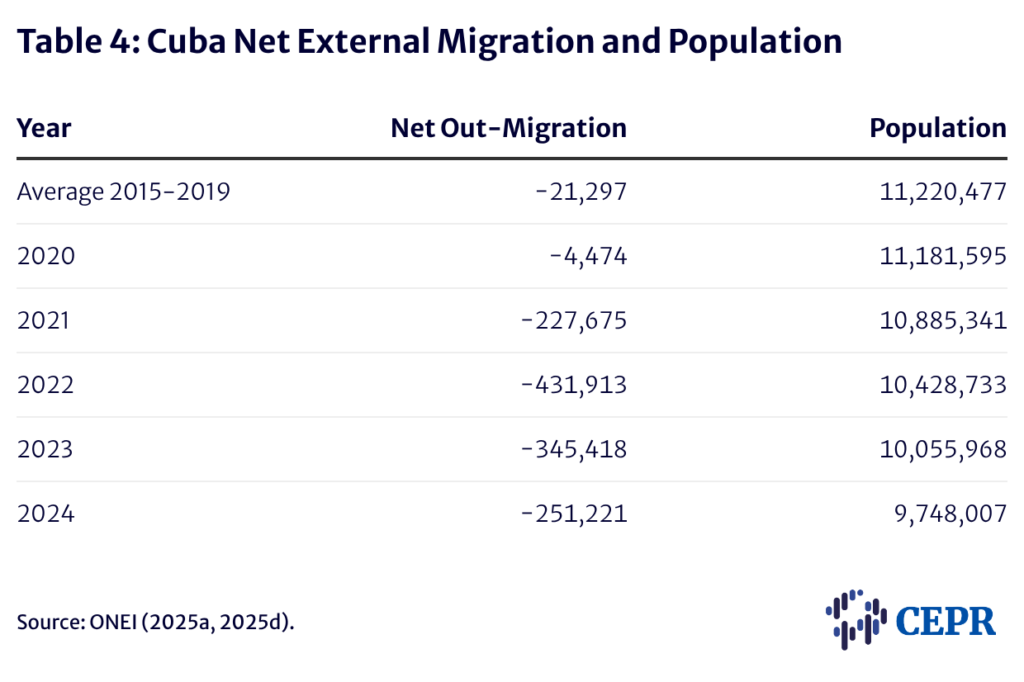
El aumento de la emigración desde Cuba a partir de 2021 (Tabla 4) es probablemente otro resultado de la fuerte caída del nivel de vida. Según la agencia de estadísticas cubana, la población se redujo un 13%,[^78] de 11,2 millones en 2020 a 9,8 millones en 2024,[^79] y esto se debió en gran medida a un enorme aumento de la migración neta —que había oscilado entre 15.000 y 25.000 por año entre 2015 y 2019, aumentando a cientos de miles anuales a partir de 2021.[^80] A modo de comparación, cada año desde 2021 ha superado el pico anterior de 1980, cuando (en términos netos) 142.000 cubanos se fueron durante el éxodo de Mariel.[^81]
Tabla 4. Saldo migratorio externo de Cuba (personas) (selección de años)
-
2015: 15.600
-
2016: 13.000
-
2017: 20.200
-
2018: 25.000
-
2019: 20.000
-
2020: 140.000 (estimado)
-
2021: 345.000
-
2022: 455.000
-
2023: 427.000
-
2024: 489.000
Fuente: ONEI.
Efectos en el sector de la salud cubano
El sector sanitario cubano se ha visto especialmente afectado por las medidas coercitivas de «presión máxima» impuestas por las administraciones estadounidenses desde 2017. Anteriormente señalamos el fuerte deterioro de los servicios de salud en los años siguientes. Como hemos visto, la ampliación y el endurecimiento de las sanciones estadounidenses han desempeñado un papel sustancial en este deterioro de las condiciones y los servicios de salud. Además, durante el viaje de investigación del CEPR a Cuba en marzo de 2024, conocimos más detalles sobre cómo estas sanciones han obstaculizado directamente la prestación de atención sanitaria al bloquear, o limitar en gran medida, la adquisición de medicamentos, insumos, suministros y equipos esenciales.
Por ejemplo, poco antes de nuestra visita a Cuba en 2024, la empresa estatal MEDICuba —que importa y exporta medicamentos y suministros médicos para el sistema estatal de salud— se vio obligada a cerrar una línea de producción de vacunas durante seis meses después de que una empresa estadounidense suspendiera el envío de insumos críticos. Del mismo modo, Cuba ha luchado por importar muchos suministros médicos básicos, y los proveedores antes fiables suspendieron repentinamente los envíos. Los proveedores de atención médica con los que entrevistamos nos dijeron que, en muchos casos, esto parecía ser el resultado de la decisión de la administración Trump de 2019 de reducir el umbral de minimis del 25% al 10%, prohibiendo así la exportación a Cuba de cualquier bien que contuviera más del 10% de contenido de origen estadounidense. Dado que la gran mayoría de los medicamentos, equipos médicos y muchos suministros médicos contienen más del 10% de contenido de origen estadounidense (incluida tecnología o componentes patentados por EE. UU.), MEDICuba ha tenido que buscar bienes médicos en lugares lejanos, a menudo a tasas superiores a las del mercado, y en muchos casos no ha podido encontrar alternativas con menos del 10% de componentes de origen estadounidense.
El personal del principal fabricante farmacéutico y centro de investigación de Cuba —BioCubaFarma— relató cómo la empresa alemana Sartorius —uno de los principales proveedores mundiales de equipos de laboratorio— dejó de suministrar repentinamente a la instalación bolsas de filtración y otros productos indispensables una vez que entró en vigor la regla de minimis del 10%. Desde entonces han luchado por encontrar proveedores alternativos fiables.
El personal de varias instituciones médicas también describió la extrema dificultad que han tenido para obtener líneas de crédito para comprar bienes médicos esenciales tras la decisión de la administración Trump de incluir a Cuba en la lista SSOT —una designación que, como hemos explicado anteriormente, ha llevado a muchas instituciones financieras internacionales a negarse a relacionarse con entidades cubanas. El personal del principal centro cardiológico infantil de Cuba relató cómo, tras la designación SSOT, se volvió extremadamente difícil obtener financiación para la compra de suministros y medicamentos. En otro caso, los profesionales médicos relataron cómo de repente hubo una falta de vacunas contra el VPH debido a la suspensión de una línea de crédito extranjera. Dado lo escaso de efectivo que se ha vuelto Cuba en los últimos años —en gran parte como resultado de las sanciones diseñadas para reducir el acceso del país a divisas—, el embargo financiero resultante de la designación SSOT ha limitado enormemente la capacidad de los proveedores médicos para satisfacer eficazmente las necesidades de sus pacientes.
Trump 2.0: un endurecimiento aún mayor de las sanciones y un bloqueo de combustible
La segunda administración Trump ha tomado medidas adicionales diseñadas para debilitar aún más la economía cubana con el objetivo de lograr un cambio de régimen. En su primer día en el cargo, el presidente Trump revirtió dos de las acciones del presidente Joe Biden, una de las cuales había iniciado el proceso para eliminar a Cuba de la lista SSOT y la otra había eliminado la Lista de Entidades Restringidas de Cuba. El 29 de enero de 2025, el secretario de Estado Rubio retiró la exención de Biden al Título III de la Ley Helms-Burton.[^82] El 6 de febrero de 2025, la administración reactivó la Lista de Entidades Restringidas de Cuba.[^83] La lista también se amplió con la inclusión de la principal empresa de procesamiento de remesas, lo que forzó la salida de Western Union de Cuba y complicó enormemente las remesas a la isla.[^84] Luego, en junio de 2025, la administración endureció las restricciones a las transacciones con entidades cubanas y a los viajes de EE. UU. a Cuba.[^85] Estas medidas limitaron aún más el acceso de Cuba a los mercados financieros internacionales y frenaron aún más el flujo de visitantes —y dólares estadounidenses— a la isla.
Además, el secretario de Estado Rubio y otros funcionarios del Departamento de Estado han redoblado sus esfuerzos para poner fin a las misiones médicas cubanas en el extranjero mediante sanciones o amenazas de sanciones a funcionarios de los países anfitriones y otras formas de presión dirigidas a los gobiernos anfitriones. Un alto funcionario caribeño declaró a POLITICO que la campaña del Departamento de Estado ha generado «mucho miedo» en la región[^86] y que la presión estadounidense —que ha incluido la cancelación de visas estadounidenses de funcionarios extranjeros[^87]— «nunca había sido tan abierta». Como resultado de esta campaña de presión, Jamaica, Honduras, Guatemala y Guyana han rescindido misiones médicas cubanas de décadas de antigüedad, lo que ha llevado a la salida de más de 1.000 profesionales médicos cubanos que brindaban servicios de atención primaria a comunidades principalmente de bajos ingresos en esos países.[^88] Tras la intervención militar estadounidense en Venezuela, el nuevo gobierno venezolano también comenzó a enviar de vuelta a los médicos cubanos, después de la presión de EE. UU.[^89]
Pero, con diferencia, la política más devastadora del presidente Trump ha sido el bloqueo de facto estadounidense a todas las importaciones cubanas de combustible, que ha estado efectivamente vigente desde principios de 2026. Primero, tras la intervención militar estadounidense en Caracas, Venezuela, el 3 de enero, la administración estadounidense bloqueó los envíos de petróleo desde Venezuela, que había sido el principal proveedor de combustible de Cuba durante la mayor parte de las últimas tres décadas.[^90] Luego, el presidente Trump firmó una orden ejecutiva declarando una «emergencia nacional», identificando a Cuba como una «amenaza inusual y extraordinaria» para la seguridad nacional de Estados Unidos y previendo represalias económicas —en forma de aranceles elevados— contra los países que suministraran petróleo a la isla, en particular México, que supuestamente superó a Venezuela como el mayor proveedor de petróleo de Cuba en 2025.[^91] Aunque el Tribunal Supremo de EE. UU. prohibió a la administración imponer aranceles mediante declaraciones de emergencia nacional en febrero, la administración Trump ha impedido que los envíos de petróleo —excepto un buque tanque procedente de Rusia a finales de marzo[^92]— lleguen a la isla, según informaron el New York Times y otros medios.[^93]
Estas nuevas medidas del presidente Trump, y particularmente el actual bloqueo petrolero, han tenido un efecto dramático en la economía y en los servicios básicos de la isla. Dado que la mayoría de la generación eléctrica de Cuba depende de productos derivados del petróleo importados, el país se ha visto sacudido por apagones cada vez más frecuentes y prolongados.[^94] El 16 de marzo, toda la isla sufrió un apagón eléctrico.[^95] La escasez de combustible ha llevado al racionamiento que ha paralizado gran parte del transporte público y ha provocado largas colas en las gasolineras.[^96]
El sector sanitario se ha visto particularmente afectado: los hospitales solo realizan cirugías de emergencia.[^97] Cinco millones de cubanos —aproximadamente la mitad de la población— padecen enfermedades crónicas y podrían ver afectados sus medicamentos o tratamientos, y la oncología, la atención cardiovascular y la enfermedad renal ya se enfrentan a un fuerte impacto por la escasez de combustible.[^98] NBC informó en marzo de que 300 ambulancias estaban paradas por falta de combustible o piezas de repuesto para su mantenimiento, dejando solo 25 ambulancias eléctricas disponibles para todo el país.[^99] En febrero, un médico general citado en el British Medical Journal declaró:
«El sistema sanitario está en total colapso. Las condiciones de trabajo son espantosas: no se proporciona comida al personal sanitario, ni siquiera agua potable a veces; la ropa de cama está sucia; no hay ventiladores en climas cálidos. Además, no hay guantes, equipos de protección ni mascarillas para el personal. Hay escasez de médicos, enfermeras y técnicos sanitarios, así como de la mitad de los medicamentos básicos y suministros médicos esenciales. Hay cortes de energía y no hay forma de comunicarse por teléfono móvil o línea fija. Parece un país en guerra».[^100]
Según informes de prensa recientes, los cortes de energía están limitando en gran medida el uso de máquinas de rayos X, ecógrafos, tomografías computarizadas y otras herramientas de diagnóstico por imagen.[^101] Muchos medicamentos, vacunas y suministros médicos, como la sangre, requieren refrigeración o congelación; en marzo, el Director General de la OMS destacó la aparición de problemas en la cadena de frío de las vacunas causados por el bloqueo de combustible.[^102] Aunque los hospitales cuentan con generadores de respaldo, que normalmente funcionan con diésel, hay retrasos de unos minutos antes de que estos entren en funcionamiento después de los cortes de energía, lo que complica las máquinas de soporte vital —por ejemplo, en las unidades neonatales, las enfermeras tienen que apresurarse a bombear manualmente los ventiladores para los bebés prematuros.[^103] A finales de febrero, una joven embarazada que recibía tratamiento por anemia en una clínica de salud maternoinfantil declaró a la AP: «ha habido un cambio drástico desde enero… No hay pan, no hay leche para la nutrición…, no hay medicinas».[^104]
Al mismo tiempo, los informes sugieren que la salud general de la población cubana ha disminuido como resultado de la desnutrición y el fuerte deterioro de las condiciones sanitarias. Estas condiciones se derivan en parte de la falta de energía suficiente para bombear agua a los edificios y de la acumulación de residuos en los espacios públicos, debido a la escasez de combustible para operar los vehículos de saneamiento.[^105] La escasez de electricidad afecta al almacenamiento de alimentos, aumentando el deterioro y el riesgo de enfermedades transmitidas por los alimentos. Este último riesgo también aumenta por la falta de combustibles para cocinar; como alternativa, los cubanos están utilizando leña y otros combustibles más contaminantes[^106] —incluso quemando basura[^107]— lo que empeora la calidad del aire y puede provocar enfermedades respiratorias, especialmente en poblaciones vulnerables como los lactantes.[^108]
Cuba está experimentando un aumento sin precedentes en todo el país de enfermedades transmitidas por mosquitos, como chikungunya, dengue y oropouche.[^109] Se estima que un tercio de la población ha sufrido infección por un arbovirus como estos.[^110] La gravedad de estos brotes es probablemente producto de las sanciones. La escasez de combustible e insecticida ha impedido las campañas masivas de fumigación que antes se utilizaban para mantener a raya a las poblaciones de mosquitos portadores de estas enfermedades.[^111] Una respuesta típica a la interrupción del suministro de agua es almacenar agua en recipientes, que son lugares de reproducción ideales para los mosquitos portadores de enfermedades.[^112]
Dada la situación cada vez más grave del sistema sanitario cubano y el deterioro del estado de salud de la población general, es muy probable que la tasa de mortalidad infantil de Cuba haya aumentado significativamente desde 2025, cuando alcanzó 9,9 por cada 1.000 nacidos vivos.[^113] Es muy probable que otros indicadores clave de salud, como la esperanza de vida y la mortalidad materna, también se hayan deteriorado desde principios de año.
Un reciente informe del New York Times sobre los efectos del bloqueo de combustible estadounidense en el sector energético cubano señalaba que, en el principal hospital de maternidad de Cuba:
«Médicos, enfermeras, personal de limpieza y madres luchan por llegar al hospital debido a la falta de combustible. Esto se traduce en salas de parto más sucias, menos trabajadores sanitarios para atender los partos y madres que llegan cuando el parto está peligrosamente avanzado.
“Estamos recibiendo casos mucho más graves”, dijo la obstetra-ginecóloga Delgado Peruyera, señalando que tres recién nacidos murieron en febrero, la cifra más alta que recuerda en un solo mes».[^114]
Conclusión
A principios de 2019, el columnista del New York Times Nicholas Kristof escribió que «un bebé estadounidense tiene, según las estadísticas oficiales, casi un 50% más de probabilidades de morir que un bebé cubano».[^115] Señaló que «Cuba logra excelentes resultados sanitarios a pesar de que el embargo comercial y financiero estadounidense daña gravemente la economía y restringe el acceso a equipos médicos». Hoy, las observaciones de Kristof ya no son válidas. El año pasado, la TMI de Cuba era un 83% más alta que la de EE. UU., y los informes sugieren que ha aumentado a niveles aún más altos en los últimos meses. El sistema sanitario cubano se ha visto profundamente afectado por una grave escasez de suministros, medicamentos, personal y —en los últimos meses— de combustible y electricidad.
Como indica la evidencia de este documento, la causa principal del aumento sin precedentes de la TMI de Cuba, y de la crisis de su que fue robusto sistema sanitario, es casi con certeza el endurecimiento de las sanciones estadounidenses que comenzó en 2017 y aumentó constantemente en los años siguientes, con solo una pequeña flexibilización durante la administración Biden. Estas medidas, que se han impuesto además del embargo comercial y financiero estadounidense de larga data, incluyen la lista de entidades restringidas de Cuba en constante expansión, el endurecimiento del umbral de minimis para las importaciones a Cuba, la reinclusión de Cuba en la lista SSOT, la aplicación del Título III de la Ley Helms-Burton y las sanciones dirigidas a las misiones médicas cubanas, entre otras medidas.
En conjunto, estas políticas de «máxima presión» han restringido enormemente el acceso de Cuba a las divisas y a las importaciones esenciales, y han contribuido a un grave deterioro del nivel de vida de los cubanos y de la calidad de los servicios básicos —especialmente la atención sanitaria. En estas condiciones, los estudios muestran que se puede esperar que aumente la mortalidad infantil —y la mortalidad en general—. Para cientos de miles de cubanos, la única opción viable ha sido emigrar a Estados Unidos y otros países, en la mayor oleada de emigración de la historia contemporánea de Cuba. Otros, incluidos al menos 1.800 niños menores de un año, han muerto.
El actual bloqueo de combustible estadounidense, que ha impedido que casi todos los envíos de combustible lleguen a Cuba, ha empeorado una situación ya de por sí grave. Se puede esperar que mueran más lactantes —personas más vulnerables— como resultado.
Dos legisladores estadounidenses que visitaron recientemente Cuba señalaron: «se trata de un cruel castigo colectivo —efectivamente un bombardeo económico de la infraestructura del país— que ha producido daños permanentes… No creemos que la mayoría de los estadounidenses quisieran que esta crueldad e inhumanidad continuaran en nuestro nombre».[^116]
Legisladores tanto de la Cámara de Representantes como del Senado de EE. UU. han presentado proyectos de ley que ordenarían el fin de la participación estadounidense en el actual bloqueo, argumentando que es ilegal e inconstitucional según la ley estadounidense.[^117] Esto se debe a que implica a las fuerzas armadas estadounidenses en hostilidades sin autorización del Congreso.
En el derecho internacional, el bloqueo naval estadounidense de Cuba, que se ha llevado a cabo mediante amenazas ejercidas sobre Estados terceros y corporaciones, así como la interceptación física de buques petroleros con destino a Cuba,[^118] es claramente un uso ilegal de la fuerza, según lo estipulado en el Artículo 2(4) de la Carta de las Naciones Unidas.[^119] También viola la prohibición de la Carta de la Organización de los Estados Americanos sobre medidas coercitivas de carácter económico o político (Artículo 20).[^120]
Los bloqueos navales también están tipificados en la Resolución 3314 de la Asamblea General de la ONU como actos de agresión (Artículo 3).[^121] La resolución define la agresión como «el uso de la fuerza armada por un Estado contra la soberanía, la integridad territorial y la independencia política de otro Estado» (Artículo 1). Como resultado de este uso de la fuerza armada, Estados Unidos se encuentra ahora involucrado en un conflicto armado,[^122] tal como se define en el Artículo 2 común de los Convenios de Ginebra. El Cuarto Convenio de Ginebra prohíbe estrictamente el castigo colectivo de civiles en cualquier conflicto armado. Esto puede ser procesado como crimen de guerra.
Referencias
[Se incluye la lista completa de referencias traducida en cuanto a títulos de artículos y nombres de medios, pero manteniendo los autores, fechas y URLs originales.]
Acosta, Luis Jaime. 2019. “Colombia Bombing, Extradition Request Roil Already Stagnant Peace Talks.” Reuters, January 23. https://www.reuters.com/article/world/colombia-bombing-extradition-request-roil-already-stagnant-peace-talks-idUSKCN1PH2GM/
Albizu-Campos, Juan Carlos. 2025. “Cuba: ¿Crisis demográfica o sistémica?” Horizonte cubano, April 17. https://horizontecubano.law.columbia.edu/news/cuba-crisis-demografica-o-sistemica
Associated Press. 2026a. “Concern Grows as Cuba Restricts Public Transportation in Response to Oil Crisis Following Threats from the US.” February 6. https://newsroom.ap.org/editorial-photos-videos/detail?itemid=d2ddc1d281d94d08aa262af276790c01&mediatype=video
—. 2026b. “Jamaica to End Decades-Long Agreement with Cuba over Medical Missions Criticized by U.S.” March 5. https://www.greenfieldreporter.com/2026/03/05/jamaica-to-end-decades-long-agreement-with-cuba-over-medical-missions-criticized-by-us/
Augustin, Ed, and Jack Nicas. 2026. “Cuban Patients Are Dying Because of U.S. Blockade, Doctors Say.” The New York Times, March 26, 2026. https://www.nytimes.com/2026/03/26/world/americas/cubas-health-system-us-oil-blockade.html
Baggott, Rob, and George Lambie. 2019. “Hard Currency, Solidarity, and Soft Power: The Motives, Implications, and Lessons of Cuban Health Internationalism.” International Journal of Social Determinants of Health and Health Services 49 (1): 19–34. https://doi.org/10.1177/0020731418805378
BBC. 2026. “BBC Looks at How Cubans Are Living with Fuel Shortages.” Video, 1 min., 42 sec. https://www.bbc.com/news/videos/cn0ewj0e7j1o
Beldarraín Chaple, Enrique, and Mary Anne Mercer. 2017. “The Cuban Response to the Ebola Epidemic in West Africa: Lessons in Solidarity.” International Journal of Social Determinants of Health and Health Services 47 (1): 130–146. https://doi.org/10.1177/0020731416681892
Blanco, Silvia. 2026. “Cuba, al borde de la parálisis: ‘Siento que es el final de la película’.” El País, February 22. https://elpais.com/america/2026-02-22/viaje-a-una-cuba-al-borde-de-la-paralisis-siento-que-es-el-final-de-la-pelicula.html
Center for Economic and Policy Research (CEPR). 2026. “Feb. 23, 10:20 AM entry.” In US Escalation in the Caribbean and Latin America — Live Updates. February 23. https://cepr.net/publications/americas-live-updates/#feb231020am
CiberCuba Editorial Team. 2026. “Remittances in Cuba: 7 Key Points to Understand What Changes and What Doesn’t When Receiving Dollars at Cadeca.” CiberCuba, April 7. https://en.cibercuba.com/noticias/2026-04-07-u1-e199370-s27061-nid325197-remesas-cuba-7-claves-entender-cambia-al-recibir
Colomé, Carla Gloria. 2025. “Dengue, Oropouche y chikungunya: una crisis epidemiológica tiene en vilo a Cuba.” El País, October 16. https://elpais.com/america/2025-10-16/dengue-oropouche-chikungunya-una-crisis-epidemiologica-tiene-en-vilo-a-cuba.html
Cubadebate. 2026. “Cuba 2025 cierra con una tasa de mortalidad infantil de 9.9 por cada mil nacidos vivos.” January 2. http://www.cubadebate.cu/noticias/2026/01/02/cuba-2025-cierra-con-una-tasa-de-mortalidad-infantil-de-9-9-por-cada-mil-nacidos-vivos/
Cuban Democracy Act of 1992, H.R. 5323, 102nd Cong. (1992). https://www.congress.gov/bill/102nd-congress/house-bill/5323/text
Delgado, Denisse. 2024. “Remittance Behaviors Among Cuban Migrants in Miami and Madrid: Motivations, Practices and Experiences.” PhD diss., University of Massachusetts Boston.
Departamento Administrativo Nacional de Estadística (DANE). 2026. Boletín técnico: Estadísticas Vitales (EEVV). Nacimientos y defunciones no fetales. Cifras año acumulado 2025pr (enero-diciembre). March 20. https://www.dane.gov.co/files/operaciones/EEVV/2026/20-mar-2026/bol-EEVV-IIsem2025pr.pdf
Diario Las Américas. 2019. “Cuba retira misión de médicos en El Salvador tras negación de permisos.” April 24. https://www.diariolasamericas.com/america-latina/cuba-retira-mision-medicos-el-salvador-negacion-permisos-n4176181
Dirección de Estadísticas e Información en Salud (DEIS). 2026. Estadísticas vitales: información básica — Año 2024. Serie 5, no. 68. Accessed April 10, 2026. https://www.argentina.gob.ar/sites/default/files/serie_5_nro_68_anuario_vitales_2024_v2.pdf
Doerr, Sebastian, and Boris Hofmann. 2022. “Recessions and Mortality: A Global Perspective.” Economics Letters 220 (November): 110860. https://doi.org/10.1016/j.econlet.2022.110860
Domínguez López, Ernesto, Ariadna Cornelio Hitchman, and Seida Barrera Rodríguez. 2025. “The Activation of the Title III of the Helms-Burton Act: The Making of a Policy.” International Journal of Cuban Studies 17 (1): 45–69. https://www.jstor.org/stable/48829653
Durán, Milexsy, and Dánica Coto. 2026. “Islandwide Blackout Hits Cuba as Island Struggles with Deepening Energy Crisis.” Los Angeles Times, March 16. https://www.latimes.com/world-nation/story/2026-03-16/islandwide-blackout-hits-cuba-as-island-struggles-with-deepening-energy-crisis
Economic Commission for Latin America and the Caribbean (ECLAC). 2023. “Recommendations on Remittances.” CIFFRA Policy Note no. 15. Accessed April 13, 2026. https://www.cepal.org/sites/default/files/project/files/ude-a2023-03-23-ndep-15-cuba-recommonremittances-eng.pdf
Edelson, Ed. 2009. “Wood Fires Can Harm the Youngest Lungs.” ABC News, November 6. https://abcnews.com/Health/Healthday/wood-fires-harm-youngest-lungs/story?id=9018497
Escobedo, Angel A., Cristians Auza-Santiváñez, Raisa Rumbaut, Maurizio Bonati, and Imti Choonara. 2021. “Cuba: Solidarity, Ebola and COVID-19.” BMJ Paediatrics Open 5 (1): e001089. https://pmc.ncbi.nlm.nih.gov/articles/PMC8136810/
Escobedo, Angel Arturo, Yaxsier de Armas, Paul Jonas, and Imti Choonara. 2026. “Impact of Economic Sanctions on Child Health in Cuba.” BMJ Paediatrics Open 10 (1): e004510. https://doi.org/10.1136/bmjpo-2026-004510
Food and Agriculture Organization of the United Nations (FAO). 2026. “FAO Food Price Index.” https://www.fao.org/worldfoodsituation/foodpricesindex/en/
Ghebreyesus, Tedros Adhanom. 2026. “The situation in #Cuba is deeply concerning as the country struggles to maintain health service delivery.” X, June 20. https://x.com/DrTedros/status/2036911681411178874
González, Marlon. 2026. “Cuban Doctors Leave Honduras as Trump Pushes to Isolate the Island.” Associated Press, March 5. https://apnews.com/article/honduras-cuban-doctors-e860064a52dfb79d5500d5b849e61066
Gordon, Joy. 2024. “Cuba’s Economic Crisis: US Sanctions and the Problem of ‘Overcompliance’.” Le Monde diplomatique (English ed.), October 7. https://mondediplo.com/outside-in/cuba-overcompliance
Government of Canada, Trade Commissioner Service. 2024. “Exporting to Cuba.” September 4. https://www.tradecommissioner.gc.ca/en/market-industry-info/search-country-region/country/canada-cuba-export/exporting.html
Hernández-Catá, Ernesto. 2001. “The Fall and Recovery of the Cuban Economy in the 1990s: Mirage or Reality?” IMF Working Paper 01/48. International Monetary Fund. https://www.elibrary.imf.org/view/journals/001/2001/048/article-A001-en.xml
—. 2019. “Swapping Petroleum for Doctors and the Impact of Cutbacks in Venezuelan Oil Deliveries.” Paper presented at the Annual Conference of the American Economic Association, San Diego, January 2020. https://www.aeaweb.org/conference/2020/preliminary/paper/N8fA9f2Z
Instituto Brasileiro de Geografia e Estatística (IBGE). n.d. “Tábua completa de mortalidade para o Brasil: análises e tabelas.” Accessed April 10, 2026. https://biblioteca.ibge.gov.br/index.php/biblioteca-catalogo?view=detalhes&id=73097
Instituto Nacional de Estadística y Geografía (INEGI). 2024. Encuesta Nacional de la Dinámica Demográfica (ENADID) 2023: principales resultados. July 19. https://www.inegi.org.mx/contenidos/programas/enadid/2023/doc/resultados_enadid23.pdf
International Committee of the Red Cross (ICRC). 1949. Geneva Convention (IV) relative to the Protection of Civilian Persons in Time of War. “Article 33: Individual responsibility, collective penalties, pillage, reprisals.” https://ihl-databases.icrc.org/en/ihl-treaties/gciv-1949/article-33
International Monetary Fund (IMF). 2026. “World Economic Outlook (WEO).” IMF Data. https://data.imf.org/en/datasets/IMF.RES:WEO
Jayapal, Pramila, and Jonathan Jackson. 2026. “Jayapal, Jackson Statement on Delegation to Cuba.” Office of Congresswoman Pramila Jayapal, April 5. https://jayapal.house.gov/2026/04/05/jayapal-jackson-statement-on-delegation-to-cuba/
Kristof, Nicholas. 2019. “Why Infants May Be More Likely to Die in America Than Cuba.” The New York Times, January 18. https://www.nytimes.com/2019/01/18/opinion/sunday/cuba-healthcare-medicare.html
Levine, Ally J., Travis Hartman, Tiana McGee, and Marianna Parraga. 2026. “Cuba Runs on Oil, and the Oil Is Running Out.” Reuters Graphics, April 8. https://www.reuters.com/graphics/CUBA-CRISIS/OIL-EXPLAINER/gkvlkjgxkpb/
Li, Yue-Zhen, Beth Peters, Stephen Propst, Deborah Wei, and Andrea Fraser-Reid. 2025. “U.S. State Department Reinstates Cuba Restricted List.” Hogan Lovells, February 19. https://www.hoganlovells.com/en/publications/us-state-department-reinstates-cuba-restricted-list
Marimow, Ann E. 2025. “Justices Strike Down Trump’s Tariffs.” The New York Times, February 20. https://www.nytimes.com/2025/02/20/us/politics/supreme-court-trump-tariffs.html
Marsh, Sarah, and John Zodzi. 2020. “FEATURE-Cuba Punches above Weight with ‘White Coat Army’ during Pandemic.” Reuters, September 15. https://www.reuters.com/world/feature-cuba-punches-above-weight-with-white-coat-army-during-pandemic-2020-09-15/
Médecins Sans Frontières (MSF). n.d. “Blockade.” The Practical Guide to Humanitarian Law. Accessed April 22, 2026. https://guide-humanitarianlaw.org/content/article/3/blockade/
Menendez, Bob, and Marco Rubio. 2020. “Menendez, Rubio Raise Concerns about Cuba’s Forced Labor Scheme, Urge Pompeo to Direct U.S. Embassies to Engage Host Governments.” United States Senate Committee on Foreign Relations, May 6. https://www.foreign.senate.gov/press/dem/release/menendez-rubio-raise-concerns-about-cubas-forced-labor-scheme-urge-pompeo-to-direct-us-embassies-to-engage-host-governments
Ministry of Foreign Affairs of Cuba (MINREX). 2022. “Update to the Report of Cuba on Resolution 75/289 of the United Nations General Assembly Entitled ‘Necessity of Ending the Economic, Commercial and Financial Blockade Imposed by the United States of America against Cuba’.” October 19. https://cubaminrex.cu/en/update-report-cuba-resolution-75289-united-nations-general-assembly-entitled-necessity-ending
Nicas, Jack, and Christiaan Triebert. 2026. “A New U.S. Blockade Is Strangling Cuba.” The New York Times, February 20. https://www.nytimes.com/2026/02/20/world/americas/cuba-oil-blockade-trump.html
Novaes, Carolina, and Cássio A. de Sousa. 2022. “Aedes Aegypti—Insights on the Impact of Water Services.” International Journal of Environmental Research and Public Health 19 (22): 15127. https://pmc.ncbi.nlm.nih.gov/articles/PMC9682355/
Organization of American States (OAS). 1993. “Charter of the Organization of American States (A-41),” Articles 19 and 20. http://www.oas.org/en/sla/dil/inter_american_treaties_A-41_charter_OAS.asp
O’Boyle, Brendan. 2018. “Thousands of Cuban Doctors Depart Brazil Leaving Millions without Medical Care.” The Irish Times, November 23. https://www.irishtimes.com/news/world/thousands-of-cuban-doctors-depart-brazil-leaving-millions-without-medical-care-1.3708043
Oficina Nacional de Estadística e Información (ONEI). 2019. “8.13 Valor del comercio exterior de servicios exportados por divisiones.” In Anuario Estadístico de Cuba 2018, Edición 2019. Accessed April 13, 2026. https://www.onei.gob.cu/sites/default/files/publicaciones/2023-01/aec_2018_0_compressed.pdf
—. 2020a. “8.3 Intercambio total y saldo comercial.” In Anuario Estadístico de Cuba 2019, Edición 2020. https://www.onei.gob.cu/sites/default/files/publicaciones/2023-01/anauario_2019_compressed.pdf
—. 2020b. “8.13 Valor del comercio exterior de servicios exportados por divisiones.” In Anuario Estadístico de Cuba 2019, Edición 2020. https://www.onei.gob.cu/sites/default/files/publicaciones/2023-01/anauario_2019_compressed.pdf
—. 2022. “15.15 Ingresos asociados al turismo internacional.” In Anuario Estadístico de Cuba 2021, Edición 2022. Accessed April 13, 2026. https://www.onei.gob.cu/sites/default/files/publicaciones/2023-04/aec-2021-edicion-2022_compressed.pdf
—. 2023a. “8.10 Importaciones de mercancías según secciones de la Clasificación Uniforme para el Comercio Internacional (CUCI).” In Anuario Estadístico de Cuba 2022, Edición 2023. https://www.onei.gob.cu/sites/default/files/publicaciones/2024-04/aec-2022.pdf
—. 2023b. “8.13 Valor del comercio exterior de servicios exportados por divisiones.” In Anuario Estadístico de Cuba 2022, Edición 2023. Accessed April 13, 2026. https://www.onei.gob.cu/sites/default/files/publicaciones/2024-04/aec-2022.pdf
—. 2025a. Anuario Estadístico de Cuba 2024: Sector externo, Edición 2025. Accessed April 13, 2026. https://www.onei.gob.cu/sites/default/files/publicaciones/2025-10/08-sector-externo_aec2024_0.pdf
—. 2025b. “1.1.1 Población residente por sexo. Tasa anual de crecimiento y razón por sexo según años calculados.” In Anuario Estadístico de Cuba 2024, Sector Externo, Edición 2025. Accessed April 9, 2026. https://www.genero.onei.gob.cu/static/documents/informes/00-anuario-demografico-2024.pdf
—. 2025c. “2.1 Nacidos vivos y tasa bruta de natalidad. Cuba, años 1966–2024.” In Anuario Estadístico de Cuba 2024, Sector Externo, Edición 2025. Accessed April 9, 2026. https://www.onei.gob.cu/sites/default/files/publicaciones/2025-07/00-anuario-demografico-2024.pdf
—. 2025d. “3.1 Defunciones generales e infantiles por sexo, tasa de mortalidad general y tasa de mortalidad infantil, años 1970–2024.” In Anuario Estadístico de Cuba 2024, Sector Externo, Edición 2025. Accessed April 9, 2026. https://www.onei.gob.cu/sites/default/files/publicaciones/2025-07/00-anuario-demografico-2024.pdf
—. 2025e. “6.2 Saldo migratorio externo por sexo y tasa de saldo migratorio externo. Años 1969–2024.” In Anuario Estadístico de Cuba 2024, Sector Externo, Edición 2025. Accessed April 9, 2026. https://www.genero.onei.gob.cu/static/documents/informes/00-anuario-demografico-2024.pdf
—. 2025f. “8.4 Intercambio total y saldo comercial de mercancías.” In Anuario Estadístico de Cuba 2024, Sector Externo, Edición 2025. Accessed April 13, 2026. https://www.onei.gob.cu/sites/default/files/publicaciones/2025-10/08-sector-externo_aec2024_0.pdf
—. 2025g. “8.11 Importaciones de mercancías según secciones de la Clasificación Uniforme para el Comercio Internacional (CUCI).” In Anuario Estadístico de Cuba 2024, Sector Externo, Edición 2025. https://www.onei.gob.cu/sites/default/files/publicaciones/2025-10/08-sector-externo_aec2024_0.pdf
—. 2025h. “8.14 Valor del comercio exterior de servicios exportados.” In Anuario Estadístico de Cuba 2024, Sector Externo, Edición 2025. Accessed April 13, 2026. https://www.onei.gob.cu/sites/default/files/publicaciones/2025-10/08-sector-externo_aec2024_0.pdf
—. 2025i. “15.14 Ingresos asociados al turismo internacional.” In Anuario Estadístico de Cuba 2024, Sector Externo, Edición 2025. Accessed April 13, 2026. https://www.onei.gob.cu/sites/default/files/publicaciones/2025-08/15-turismo_aec2024.pdf
OnCuba Staff. 2026. “More than 96,000 Patients Await Surgery amid U.S. Oil Embargo, Warns Health Minister.” OnCubaNews, March 14. https://oncubanews.com/en/cuba/more-than-96000-patients-await-surgery-amid-u-s-oil-embargo-warns-health-minister/
Ortagus, Morgan. 2019. “Visa Actions Against Cuban Officials Exploiting Cuban Doctors.” Press statement, US Department of State, September 30. https://2017-2021.state.gov/visa-actions-against-cuban-officials-exploiting-cuban-doctors
Parraga, Marianna, and Dave Sherwood. 2025. “Cuba Struggles to Ease Power Cuts amid Reduced Fuel Supplies from Venezuela, Mexico.” Reuters, November 20. https://www.reuters.com/business/energy/cuba-struggles-ease-power-cuts-amid-reduced-fuel-supplies-venezuela-mexico-2025-11-19/
Pompeo, Michael R. 2020. “Secretary Michael R. Pompeo at a Press Availability.” Remarks to the Press, US Department of State, July 8. https://2017-2021.state.gov/secretary-michael-r-pompeo-at-a-press-availability-9/?safe=1
—. 2021. “U.S. Announces Designation of Cuba as a State Sponsor of Terrorism.” Press release, US Department of State, January 11. https://2017-2021.state.gov/u-s-announces-designation-of-cuba-as-a-state-sponsor-of-terrorism/
Reidpath, Daniel D., and Pascale Allotey. 2003. “Infant Mortality Rate as an Indicator of Population Health.” Journal of Epidemiology and Community Health 57 (5): 344–46. https://pmc.ncbi.nlm.nih.gov/articles/PMC1732453/pdf/v057p00344.pdf
Reuters. 2020. “Western Union Says Suspending U.S. Transfers to Cuba.” November 14. https://www.reuters.com/world/americas/western-union-says-suspending-us-transfers-cuba-2020-11-14/
—. 2025. “Las fuerzas de seguridad cubanas abandonan Venezuela mientras aumenta la presión de EE.UU.” October 19. https://es-us.noticias.yahoo.com/fuerzas-seguridad-cubanas-abandonan-venezuela-134243270.html
—. 2026. “Guatemala to Wind Down Cuban Doctors Program This Year.” February 10. https://duke.fm/2026/02/10/guatemala-to-wind-down-cuban-doctors-program-this-year-2/
Rodríguez, Andrea, and Milexsy Durán. 2026. “Cuba’s Health Care System Pushed to the Brink by US Fuel Blockade, Cuban Minister Says.” Associated Press, March 14. https://apnews.com/article/cuba-health-care-us-energy-embargo-crisis-33ad8447dc4b442ea9b614eb91392be5
Rodríguez, Francisco, Silvio Rendón, and Mark Weisbrot. 2025. “Effects of International Sanctions on Age-Specific Mortality: A Cross-National Panel Data Analysis.” The Lancet Global Health 13 (8): e1358–e1366. https://www.thelancet.com/journals/langlo/article/PIIS2214-109X(25)00189-5/fulltext
Rodríguez Rodríguez, Raúl. 2025. “The Impact of US Sanctions on Cuba’s Economic Development.” In The Economic Impact of US Sanctions on Cuba: Past, Present, and Future, 153–68. Cambridge, MA: Cambridge University Press. https://doi.org/10.1017/9781108915632.010
Rotstein, Jason. 2019. “The Legacy of the Libertad Act: Defeating Title III Claims and Protecting International Comity.” Harvard International Law Journal (blog), November 18. https://journals.law.harvard.edu/ilj/2019/11/the-legacy-of-the-libertad-act-defeating-title-iii-claims-and-protecting-international-comity/
Rubio, Marco. 2025a. “Expansion of Visa Restrictions Policy for Individuals Exploiting Cuban Labor.” Press statement, US Department of State, February 25. https://www.state.gov/expansion-of-visa-restrictions-policy-for-individuals-exploiting-cuban-labor
—. 2025b. “Restoring a Tough U.S.-Cuba Policy.” US Department of State, June 30. https://www.state.gov/restoring-a-tough-u-s-cuba-policy
Shepardson, David. 2022. “U.S. Lifts Cuba Flight Restrictions Imposed under Trump.” Reuters, June 1. https://www.reuters.com/world/americas/us-lifts-cuba-flight-restrictions-imposed-under-trump-administration-2022-06-01/
Solis, George, Mary Murray, and Carmen Sesin. 2026. “In a Cuban Hospital, Patients and Doctors Are Hard Hit by Outages and Fuel Shortages.” NBC News, March 18. https://www.nbcnews.com/world/cuba/inside-cuba-hospital-outages-hard-hit-blackouts-rcna264184
Statistical Institute of Jamaica (STATIN). n.d. “Infant Mortality Rate, Under Five Mortality Rate and Maternal Mortality Rate.” In Health Statistics. Accessed April 10, 2026. https://statinja.gov.jm/demo_socialstats/health.aspx
Taylor, Ivan. 2025. “Western Union Suspends Money Transfers to Cuba Following U.S. Sanctions.” CBS Miami, February 11. https://www.cbsnews.com/miami/news/western-union-suspends-money-transfers-to-cuba-following-u-s-sanctions/
Taylor, Luke. 2025. “Cuba Hit by Surge of Dengue and Other Infectious Diseases.” BMJ 391: r2688. https://doi.org/10.1136/bmj.r2688
—. 2026. “Cuba Health Crisis: Blackouts and Fuel Shortages Following Trump Pressure.” BMJ 392: s383. https://www.bmj.com/content/392/bmj.s383?hwshib2=authn%3A1775250496%3A20260402%253Ad4df3910-c111-44c7-bddc-7229fbacb4c4%3A0%3A0%3A0%3ADMkRNb8AXie1Ce%2FWnCEcQQ%3D%3D
Toosi, Nahal, and Eric Bazail-Eimil. 2026. “Cuban Doctors, U.S. Pressure.” POLITICO, March 13. https://www.politico.com/news/2026/03/13/cuban-doctors-us-pressure-00827683
Trotta, Daniel. 2026. “Cuban Doctors Endure Burnout, Blackouts as Once-Vaunted Healthcare Declines.” Reuters, March 26. https://www.reuters.com/business/healthcare-pharmaceuticals/cuban-doctors-endure-burnout-blackouts-once-vaunted-healthcare-declines-2026-03-26/
United Nations. 2026. “Humanitarian Pressures Grow as Cuba Continues to Struggle with Energy Shortages.” February 26. https://news.un.org/en/story/2026/02/1167046
—. 1945. Charter of the United Nations. https://www.un.org/en/about-us/un-charter/full-text
United Nations, Department of Economic and Social Affairs, Population Division (UN DESA). 2024. World Population Prospects 2024: Summary of Results. https://population.un.org/wpp/assets/Files/WPP2024_Summary-of-Results.pdf.
—. 2025. World Fertility 2024. https://www.un.org/development/desa/pd/sites/www.un.org.development.desa.pd/files/undesa_pd_2025_wfr_2024_final.pdf
United Nations General Assembly. 1974. “Definition of Aggression.” A/RES/3314 (XXIX), December 14, 1974. https://docs.un.org/en/A/RES/3314%20(XXIX)
United Nations Trade and Development (UNCTAD). n.d. “UNCTADstat Data Centre: Remittances.” Accessed April 13, 2026. https://unctadstat.unctad.org/datacentre/dataviewer/US.Remittances
UN Tourism. n.d. “UN Tourism Tourism Data Dashboard.” Accessed April 9, 2026. https://www.untourism.int/tourism-data/un-tourism-tourism-dashboard
US Department of State. 2025a. “Cuba Restricted List.” January 16, 2025. https://www.state.gov/division-for-counter-threat-finance-and-sanctions/cuba-restricted-list
—. 2025b. “Publishing the State Department’s List of Entities and Subentities Associated With Cuba (Cuba Restricted List).” Federal Register 90, no. 24 (February 6): 9101–3. https://www.federalregister.gov/documents/2025/02/06/2025-02282/publishing-the-state-departments-list-of-entities-and-subentities-associated-with-cuba-cuba
US Department of State, Office of the Historian. n.d. “499. Memorandum From the Deputy Assistant Secretary of State for Inter-American Affairs (Mallory) to the Assistant Secretary of State for Inter-American Affairs (Rubottom).” In Foreign Relations of the United States, 1958–1960, Cuba, Volume VI. Accessed April 13, 2026. https://history.state.gov/historicaldocuments/frus1958-60v06/d499
Vidal, Pavel. 2025. “Impact of Sanctions Policy Shifts: A Case Study of the United States and Cuba, 1994–2020.” Journal of International Development 37 (2): 540–553. https://doi.org/10.1002/jid.3973
Webber, Jude. 2026. “Mexico Risks Donald Trump’s Ire with Cuban Oil Shipments.” Financial Times, January 6. https://www.ft.com/content/f04088c3-66af-4d7c-b5fd-df0e423bd837?syn-25a6b1a6=1
Weisbrot, Mark. 2025. “Rethink Sanctions. They’re Killing as Many People as War Does.” Los Angeles Times, July 24. https://www.latimes.com/opinion/story/2025-07-24/united-states-sanctions-deaths
Weisbrot, Mark, and Jeffery Sachs. 2019. “Economic Sanctions as Collective Punishment: The Case of Venezuela.” Center for Economic and Policy Research, April 25. https://cepr.net/publications/economic-sanctions-as-collective-punishment-the-case-of-venezuela/
The White House. 2025a. “Fact Sheet: President Donald J. Trump Strengthens the Policy of the United States Toward Cuba.” June 30. https://www.whitehouse.gov/fact-sheets/2025/06/fact-sheet-president-donald-j-trump-strengthens-the-policy-of-the-united-states-toward-cuba/
—. 2025b. “National Security Presidential Memorandum/NSPM-5.” June 30. https://www.whitehouse.gov/presidential-actions/2025/06/national-security-presidential-memorandum-nspm-5/
—. 2026. “Addressing Threats to the United States by the Government of Cuba.” Executive order, January 29. https://www.whitehouse.gov/presidential-actions/2026/01/addressing-threats-to-the-united-states-by-the-government-of-cuba/
Wilkinson, Bert. 2026. “Cuban Doctors to Leave Guyana as U.S. Applies Pressure over Island’s Medical Missions.” Associated Press, March 9. https://apnews.com/article/cuba-doctors-guyana-jamaica-honduras-trump-4b90e73c333d0513d017ecce61929a6b
World Bank. n.d.-a. “GDP per Capita (Constant 2015 US$).” World Development Indicators. Accessed April 9, 2026. https://data.worldbank.org/indicator/NY.GDP.PCAP.KD
—. n.d.-b. “Life Expectancy at Birth, Total (Years).” World Development Indicators. Accessed April 9, 2026. https://data.worldbank.org/indicator/SP.DYN.LE00.IN
—. n.d.-c. “Maternal Mortality Ratio (Modeled Estimate, per 100,000 Live Births).” World Development Indicators. Accessed April 9, 2026. https://data.worldbank.org/indicator/SH.STA.MMRT
—. n.d.-d. “Mortality Rate, Infant (per 1,000 Live Births).” World Development Indicators. Accessed April 9, 2026. https://data.worldbank.org/indicator/SP.DYN.IMRT.IN
—. n.d.-e. “Physicians (per 1,000 People).” World Development Indicators. Accessed April 10, 2026. https://data.worldbank.org/indicator/SH.MED.PHYS.ZS?locations=CU
World Health Organization (WHO). n.d.-a. “Domestic General Government Health Expenditure (GGHE-D).” Global Health Expenditure Database. Accessed April 10, 2026. https://apps.who.int/nha/database/ViewData/Indicators/en
—. n.d.-b. “Infant Mortality Rate (Between Birth and 11 Months per 1000 Live Births).” Indicator Metadata Registry, Global Health Observatory. Accessed April 10, 2026. https://www.who.int/data/gho/indicator-metadata-registry/imr-details/1
Wulfhorst, Ellen. 2019. “U.S. Says Cuban Medical Missions Are Trafficking Doctors.” Reuters, September 27. https://www.reuters.com/article/world/us-says-cuban-medical-missions-are-trafficking-doctors-idUSKBN1WC00W/
Wyss, Jim. 2025. “Western Union Halts Money Transfers to Cuba Citing New Sanctions.” Bloomberg, February 10. https://www.bloomberg.com/news/articles/2025-02-10/western-union-halts-money-transfers-to-cuba-citing-new-sanctions
Notas
-
It is “strongly related to those structural factors like economic development, general living conditions, social well being, and the quality of the environment, that affect the health of entire populations” (Reidpath and Allotey; 2003). The World Health Organization also notes that infant mortality rates “reflect the social, economic and environmental conditions in which children (and others in society) live” (WHO; n.d.-b).
-
Cubadebate (2026); ONEI (2025c, 2025d).
-
World Bank (n.d.-b).
-
Rodríguez, Rendón, and Weisbrot (2025).
-
There are about 132 million births per year, which is 1.6 percent of the 8.1 billion world population in 2024. UN DESA (2024, 2025).
-
Doerr and Hofmann (2022).
-
It was rescinded by President Joe Biden on January 14, 2025 and reinstituted by President Trump on January 20, 2025.
-
The Trump administration reinstored the State Sponsor of Terrorism designation without providing credible evidence that Cuba supports terrorism and despite a prior formal US Department of State review that concluded that there was no basis for maintaining the designation.
-
This was reversed by President Biden on January 14, 2025 but re-instituted by President Trump on January 20, 2025.
-
President Biden ordered the renewal of the waiver on January 14, 2025; the Trump administration reversed Biden’s order on January 29, 2025
-
Following the forced exit of Western Union in 2020, there are reports of transaction fees rising from 11 percent to as much as 40 percent. See Delgado (2024).
-
Nicas and Triebert (2026).
-
UN Tourism (n.d.).
-
ONEI (2022; 2025i).
-
ONEI (2019; 2023b).
-
UNCTAD (n.d.).
-
Excluding donated goods and goods acquired in ports by means of transport. ONEI (2025g).
-
ONEI (2025b).
-
Augustin and Nicas (2026); Trotta (2026).
-
Solis, Murray, and Sesin (2026).
-
Associated Press (2026a).
-
L. Taylor (2025).
-
It is “strongly related to those structural factors like economic development, general living conditions, social well being, and the quality of the environment, that affect the health of entire populations” (Reidpath and Allotey; 2003). The World Health Organization also notes that infant mortality rates “reflect the social, economic and environmental conditions in which children (and others in society) live.” (WHO; n.d.-b).
-
World Bank (n.d.-e).
-
IBGE (n.d.).
-
DEIS (2026); DANE (2026); INEGI (2024); STATIN (n.d.).
-
Trotta (2026).
-
Rodríguez, Rendón, and Weisbrot (2025).
-
Weisbrot (2025).
-
These methods included entropy balancing, Granger causality, event-study, and instrumental variables.
-
There are about 132 million births per year, which is 1.6 percent of the 8.1 billion world population in 2024. UN DESA (2024, 2025).
-
Doerr and Hofmann (2022).
-
IMF (2026).
-
Weisbrot and Sachs (2019).
-
Doerr and Hofmann (2022).
-
See below for more detail and see also Escobedo et al. (2026).
-
The goals and mechanisms of this emerging policy were laid out in a 1960 memorandum by the then Deputy Assistant Secretary for Inter-American Affairs: The only foreseeable means of alienating internal support is through disenchantment and disaffection based on economic dissatisfaction and hardship. . . . it follows that every possible means should be undertaken promptly to weaken the economic life of Cuba. If such a policy is adopted, it should be the result of a positive decision which would call forth a line of action which, while as adroit and inconspicuous as possible, makes the greatest inroads in denying money and supplies to Cuba, to decrease monetary and real wages, to bring about hunger, desperation and overthrow of government. (US Department of State, Office of the Historian [n.d.].)
-
Hernández-Catá (2001).
-
Cuban Democracy Act of 1992 (1992).
-
Rotstein (2019).
-
Government of Canada, Trade Commissioner Service (2024).
-
The White House (2025b).
-
The list also includes ANTEX, which manages professional services including health-care exports in some countries; GAESA conglomerate, whose subsidiaries comprise a significant share of the Cuban economy; and FINCIMEX and (since 2025) Orbit S.A., which both process remittances. US Department of State (2025a).
-
This restriction was removed by Biden in 2022 and has not yet been reimposed by President Trump. Shepardson (2022).
-
Reuters (2020). Biden reduced restrictions on remittances in 2022, allowing Western Union to return in 2023 in cooperation with the Cuban firm Orbit, which processed the transactions. When Trump returned to office in 2025, Orbit was added to the reinstated Cuba Restricted List that also banned other financial services companies involved in processing remittances. This compelled Western Union to again close its Cuban operations. I. Taylor (2025).
-
The two cases are Havana Docks Corp v. Royal Caribbean Cruises, Ltd. and Exxon Mobil v. Corporación CIMEX. The former is notable as Christopher Landau, current Deputy Secretary of State, was counsel for Havana Docks Corporation prior to his nomination. The Trump administration has filed briefings to the Supreme Court in support of Havana Docks. CEPR (2026).
-
See Domínguez López, Cornelio Hitchman, and Barrera Rodríguez (2025).
-
The redesignation was issued in large part on the grounds that Cuba had hosted members of the Colombian National Liberation Army (ELN) to conduct peace talks with the Colombian government and because “citing peace negotiation protocols, Cuba . . . refused Colombia’s requests to extradite ten ELN leaders living in Havana.” Norway — which was a co-guarantor of the peace process — also opposed their extradition. Pompeo (2021); Acosta (2019).
-
BNP Paribas, for example, was fined $9 billion in 2014. Gordon (2024).
-
MINREX (2022). The Society for Worldwide Interbank Financial Telecommunication (SWIFT) is the main international payments network.
-
Rodríguez Rodríguez (2025).
-
Gordon (2024).
-
O’Boyle (2018); Diario Las Américas (2019).
-
Ortagus (2019).
-
Wulfhorst (2019).
-
Marsh and Zodzi (2020). The Bolivian mission was reinstated after the restoration of democracy in 2020.
-
Menendez and Rubio (2020).
-
Pompeo (2020).
-
Baggott and Lambie (2019), Escobedo et al. (2021), Marsh and Zodzi (2020).
-
Baggott and Lambie (2019), Beldarraín Chaple and Mercer (2017).
-
ONEI (2019).
-
ONEI (2023b). There is a series break after 2022 (when these exports were $4.9 billion), with the “Servicios de salud humana y servicios de atención social” category appearing to be merged into “Servicios personales, culturales y recreativos,” of which medical services appears to be the main contribution. This was $5.4 billion in 2024, the last year for which there is data. The recovery can be attributed to the restoration of the programs in Bolivia and Brazil. ONEI (2023b, 2025h).
-
ONEI (2022).
-
ONEI (2025i).
-
UN Tourism (n.d.).
-
ECLAC (2023, 2).
-
ECLAC (2023).
-
Delgado (2024).
-
Delgado (2024, 204).
-
UNCTAD (n.d.).
-
Ibid.
-
Excluding donated goods and goods acquired in ports by means of transport.
-
ONEI (2025f). There was also a significant goods import compression of about US$4.4 billion or 30 percent from 2013 to 2016. This is likely explained by the sharp fall in the price of oil over these years — and, from 2015, the decline in Venezuela’s economy, which reduced exports to Cuba; the value of Cuba’s oil imports fell by US$4.5 billion over the period. See Hernández-Catá (2019).
-
The latest statistical yearbook only has partial current account data until 2020, in which year a deficit emerged. It does not have capital account or reserves data. ONEI (2025a).
-
Exports fell by 32 percent over 2018–2024, with goods exports (which accounted for just 16 percent of total exports in 2024) falling somewhat faster (-38 percent) than services exports (-31 percent). ONEI (2020a, 2020b, 2025f, 2025h).
-
Vidal (2025).
-
Deflated by authors using the FAO’s Food Price Index, which is a measure of the change in international prices of a basket of food commodities. FAO (2026). Food imports data from ONEI (2023a; 2025g).
-
A research note by Albizu-Campos (2025) argues that the official data understates out-migration — the author’s adjustments indicate that the population actually fell by 24 percent. While some of the adjustments suggested are reasonable, others — such as treating CBP encounters as individual migrants — seem to introduce a source of overestimation.
-
ONEI (2025b).
-
ONEI (2025e).
-
Ibid.
-
Rubio (2025b).
-
US Department of State (2025b); Li et al. (2025).
-
There are reports that Cuban-Americans who want to send money are having to rely on more costly and risky routes to send money, including cash carried by mules, cryptocurrency transactions, and transfers sent via third countries. CiberCuba Editorial Team (2026); Wyss (2025).
-
The White House (2025a, 2025b).
-
Toosi and Bazail-Eimil (2026).
-
Rubio (2025a).
-
Associated Press (2026b); González (2026); Reuters (2026); Wilkinson (2026).
-
Reuters (2025).
-
Webber (2026). There is disagreement in the reporting with Reuters noting figures that show Venezuela continued to be Cuba’s main supplier over the first 10 months of 2025. Parraga and Sherwood (2025).
-
The White House (2026).
-
This shipment is insufficient to meet Cuba’s oil needs, being equivalent to just 7–10 days of demand. The White House spokesperson said that they would treat future shipments on a case-by-case basis, and it is notable that Mexico, despite the stated desire of its president, has not restarted shipments. Levine et al. (2026).
-
Marimow (2025); Nicas and Triebert (2026).
-
United Nations (2026)
-
Durán and Coto (2026).
-
Associated Press (2026a).
-
OnCuba Staff (2026).
-
Rodríguez and Durán (2026).
-
Solis, Murray, and Sesin (2026).
-
Taylor (2026).
-
Rodríguez and Durán (2026); Taylor (2026).
-
Ghebreyesus (2026).
-
Trotta (2026).
-
Rodríguez and Durán (2026).
-
Eighty-four percent of water pumping is dependent on electricity, and 10 percent of the population rely on (gasoline-/diesel-dependent) tanker trucks for potable water. United Nations (2026).
-
BBC (2026).
-
Blanco (2026).
-
Edelson (2009).
-
L. Taylor (2025).
-
Escobedo et al. (2026).
-
Colomé (2025).
-
See Novaes and de Sousa (2022).
-
Preliminary figure. Cubadebate (2026).
-
Augustin and Nicas (2026).
-
Kristof (2019).
-
Jayapal and Jackson (2026).
-
Weisbrot (2025).
-
Nicas and Triebert (2026).
-
United Nations (1945).
-
See Articles 19 and 20 of OAS (1993).
-
United Nations General Assembly (1974).
-
ICRC (1949).
US Sanctions and the Sharp Rise in Infant Mortality in Cuba
By Alexander Main, Joe Sammut, Mark Weisbrot, Guillaume Long
- Executive Summary
- A Dramatic Increase in Cuban Infant Mortality
- Sanctions and Infant Mortality: What Recent Studies Tells Us
- The Economic and Social Impact of Recent US Cuba Policy
- Trump 1.0: An Unprecedented Expansion of US Sanctions
- Effects on Cuba’s Health Care Sector
- Trump 2.0: A Further Hardening of Sanctions and a Fuel Blockade
- Conclusion
- References
Press Release
Executive Summary
A country’s infant mortality rate (IMR) is often considered a key barometer for a population’s overall health as well as its access to quality health care.1 In Cuba, where for decades the state has invested substantially in health care services, the IMR was, until recently, among the lowest in the Western Hemisphere and lower than in the US. Since 2018, however, Cuba’s IMR has increased from an annual rate of 4.0 per 1,000 live births to a rate of 9.9 as of 2025,2 representing an increase of 148 percent. If the rate of infant mortality had remained unchanged, then approximately 1,800 fewer babies would have died since 2018.
This striking increase in Cuba’s IMR, which is at variance with trends seen in other countries in the region, has taken place over a period (2017–2025) that has seen an unprecedented expansion and tightening of the US commercial and financial embargo that has been in place since the early 1960s. It is worth noting that, in the years following the global COVID-19 pandemic and again in contrast with nearly all of its regional neighbors, Cuba failed to experience a substantial economic rebound, averaging 0.4 percent annual per capita GDP growth between 2020 and 2024 versus 3.2 percent for the Latin American and Caribbean region as a whole.3
Recent studies show a strong causal relationship between sanctions imposed and increased death rates. In August 2025, a Lancet Global Health study estimated, based on a panel regression incorporating data from 152 countries, that broad, unilateral sanctions resulted in approximately 564,000 deaths annually over the years 2012–2021.4 The study also found that children under five years old accounted for 51 percent of these deaths. Infant mortality is generally about three-quarters of under-five mortality. These numbers therefore reflect a profound disproportionality in the impact of sanctions on infants and children under five years of age as compared with other age groups; infants are only about 1.6 percent of the world population.5
Sanction measures adopted by US administrations since 2017 are designed to cause economic damage to Cuba by further reducing its access to foreign exchange and international financial markets; such measures can, and appear intended to, cause recessions, depressions, balance of payments crises, and higher inflation, even hyperinflation — as similar sanctions have done in other countries. A 2022 paper published by the Bank for International Settlements found that “child mortality rises in a highly significant way in recessions in EMDEs [emerging market and developing economies], by about 6 deaths per 1000 births.”6 Again, these numbers are for mortality of children under five years old. As mentioned above, about three-quarters of this mortality in the world is infant mortality, so this study implies that a recession would increase mortality by 4.5 deaths per 1,000 births. This is most of the increase that the data show for Cuba (from 4.0 to 9.9, so an additional 5.9 deaths per 1,000 births).
The unparalleled hardening of US sanctions against Cuba during the first Trump administration, the Biden administration’s decision to largely maintain these policies, and the further expansion of sanctions during the second Trump administration, including a devastating fuel blockade, is very likely the primary cause of the current economic and humanitarian crisis in Cuba, which is widely considered to be the worst in the island’s contemporary history.
Among the most harmful measures imposed over the last eight years are the following:
- The Cuba Restricted Entities List, prohibiting transactions with most of Cuba’s major hotels and many other state-run businesses (created in 2017 by President Donald Trump).7
- Reduction of the de minimis threshold on Cuba to 10 percent, blocking all exports of foreign-made products to Cuba that include more than 10 percent US-origin content (tightened from 25 percent to 10 percent in October 2019).
- Far-reaching restrictions on US travel to Cuba, including ending the main travel license allowing travel to Cuba for individuals (June 2017) and for groups (June 2019; rescinded in 2022, reinstituted in 2025) and the banning of cruise and most private vessels/aircraft from calling at Cuba (June 2019).
- Re-inclusion of Cuba on the State Sponsor of Terrorism list,8 triggering potential onerous fines for international financial institutions that do business with Cuban entities and blocking citizens of 42 Electronic System for Travel Authorization-applicable countries (EU, UK, Japan, Australia, South Korea, etc.) from traveling to the US visa-free if they travel to Cuba (instituted on January 12, 2021).9
- The nonrenewal of the presidential waiver on Title III of the Helms-Burton Act, allowing US citizens and entities to sue third-party individuals and companies — including non-US companies — that engage in business with Cuban entities benefiting from nationalized properties (President Trump let the waiver expire in May 2019).10
- Measures restricting the flow of remittances, including caps on family remittances ($1,000 per quarter), bans of all donative remittances (ordered by President Trump on September 9, 2019; removed by Biden on June 9, 2022), and the addition of the Cuban firm that processes remittances for Western Union and other US companies to the Cuba restricted list in 2020. Operations resumed with a new Cuban partner in 2023, but this firm was also added to the list in January 2025, again closing the main channel for formal remittances and forcing reliance on costlier alternatives.11
- Sanctions and other pressure targeting officials of governments hosting Cuban international medical missions, leading to the departure of many of these missions and the steady erosion of Cuba’s primary source of foreign income (pursued by both Trump administrations).
- US fuel blockade — by far the most damaging US unilateral measure to date — consisting in the blocking of nearly all oil shipments from Venezuela through the use of coercive tactics employed by the US military, including the interception of tankers destined to Cuba by the US Coast Guard,12 as well as threats, including threats of tariffs directed at countries considering exporting oil to Cuba (pursued by President Trump since early January 2026).
In the aggregate, these measures have — by fueling steep reductions in export earnings from tourism, medical services, foreign investment, remittances, and so on and by cutting Cuba off from most international credit — stifled economic growth and significantly contributed to major balance of payments difficulties, leading to increased inflation, reduced imports of essential goods, and reduced economic growth. Given these conditions, it is unsurprising that Cuba is experiencing an acute economic crisis that has led to a major decline in living standards that has, in turn, resulted in an unprecedented number of departures from the island over the last few years. This crisis has been compounded by this year’s fuel blockade, which has prompted increasingly frequent and prolonged power outages and brought many essential services and economic activities to a halt.
While there aren’t available data to begin measuring the impact of this year’s fuel blockade yet, the other sanction measures cited above played a very large, sometimes predominant, role in the following developments:
- Tourist arrivals in Cuba fell by 53 percent between 2018 and 2024;13 neighboring countries with similar volumes of tourism experienced increases in arrivals or no significant change.
- Income from tourism fell 59 percent, from $3.2 billion in 2017 to $1.3 billion in 2024.14
- Export earnings from medical services (international medical missions) fell 23 percent, from $6.4 billion in 2018 to around $4.9 billion in 2022, the last year for which there are data.15
- Remittances fell 42 percent from $4 billion in 2018 to just $2.3 billion in 2024.16
- Domestic spending on goods imports fell from $11.5 billion in 2018 to $8.1 billion in 2024,17 a steep fall of 30 percent (or 19 percent in per capita terms) that is likely understated in the official data.
- According to Cuba’s National Statistics Office, Cuba’s population fell by 13 percent from 11.2 million in 2020 to 9.8 million in 2024,18 a rate of out-migration that far surpasses all prior episodes of intense out-migration from Cuba (such as the Mariel Boatlift in 1980).
These and other similar data reflect a rapidly deteriorating social and economic reality that has taken a major toll on the Cuban people. The human consequences of this decline include widespread undernourishment, a significant worsening of sanitary conditions, a rise in disease and sickness, and — as underscored above — an increase in deaths, particularly the deaths of infant children.
CEPR staff has also observed in situ how US sanctions measures have directly contributed to the deterioration of Cuba’s once exemplary health care sector, which is undoubtedly a factor that has contributed to the marked increase in Cuba’s IMR. During a 2024 trip to Cuba to assess the impact of the hardening of US sanctions, CEPR visited Cuban health care facilities and spoke to numerous health care providers. The visit confirmed that, as a result of the reduction of the de minimis threshold in 2019, Cuban medical importers were no longer able to obtain at affordable prices many basic medical supplies, such as syringes, inhalers, and even saline solution; more sophisticated medical equipment, such as imaging and ultrasound systems; and inputs for the manufacturing of pharmaceuticals. The re-designation of Cuba as a State Sponsor of Terrorism in 2021 has made it extremely challenging to obtain financing for the purchase of these goods — at any price — or to simply execute international payments to purchase them. The end result of these multiple barriers generated by these sanctions has been massive shortages of medical goods — supplies, equipment, medicines — that had once been far more readily available in spite of the long-standing US embargo.
The situation in Cuba has declined even further since last year and could devolve into an even more severe humanitarian crisis as a result of the US fuel blockade. As a number of recent media reports have noted, the blockade has had a particularly dire effect on Cuba’s health care infrastructure, with frequent power outages interrupting the use of critical equipment for the treatment of patients, including incubators for premature babies and ventilators to help sick newborns breathe.19 There is virtually no available fuel to transport sick patients, whether by ambulance or in private vehicles — NBC reported in March that 300 ambulances are sitting idle for lack of fuel or parts, leaving only 25 electric ambulances to serve the entire island.20 Public transportation is paralyzed,21 leading to an even greater absence of medical workers in key facilities.22 None of this is surprising. In fact, these are precisely the consequences that could be expected from a fuel blockade targeting an island nation that only produces roughly 40 percent of the energy required to meet its domestic needs.
Given the effects of the US energy blockade, it is highly likely that Cuba’s infant mortality rate has increased significantly since December 2025 when it had reached 9.9 per 1,000 live births. Other key health indicators, such as life expectancy and maternal mortality, have also very likely deteriorated since the beginning of the year.
A Dramatic Increase in Cuban Infant Mortality
A country’s infant mortality rate (IMR) — defined as the number of deaths of infants under one year of age per 1,000 live births — is often considered a key barometer for a population’s overall health as well as its access to quality health care.23 Until recently, Cuba’s IMR was among the lowest in the Western Hemisphere — lower even than the rate for the US — with, for instance, a rate of 4.3 in 2015 according to Cuba’s health authorities, or 4.8 according to World Bank/UN estimates versus an average regional rate of 15.6 and a US rate of 5.8.
Cuba’s exceptionally low rate, particularly for a country that has lagged behind the majority of the rest of the region economically, was attributable in part to significant public investment —over many years — in health care. For decades, Cuba’s government has spent proportionately more on health care than nearly all of its regional neighbors. Among other things, it greatly expanded preventive primary care services, increased the number of health care facilities, and trained large numbers of health care professionals, resulting in one of the highest rates of physician density in the world.24 This robust and consistent investment in health care explains, at least in part, why Cuba has had, until recently, higher average life expectancy, much lower maternal mortality, and far lower infant mortality than the Latin American and Caribbean average (see Table 1). Table 1 uses internationally comparable World Bank data for these indicators to show how, in 2017, Cuba had superior results than the regional average as well as a sample of its neighbors.

Since 2019, Cuba’s IMR has increased dramatically — rising from a rate of 4.0 that year to 9.9 for 2025 (Table 2), an increase of 148 percent. If the mortality rate had remained at its 2018 level, then approximately 1,800 fewer babies would have died between 2019 and 2025. This is a very different trajectory to other countries in the sample. For the countries that have published recent infant mortality rates (Argentina, Brazil, Colombia, Mexico, and Jamaica), only Brazil saw an increase in the mortality rate, which rose by 3 percent from 11.9 in 2019 to 12.3 in 2024.25 All of the others saw declines or stagnation in the rates.26
In Table 2 we use official government statistics — which, unlike the World Bank database, provide data for 2024 and 2025 — to provide a picture of the sharp increase in Cuba’s IMR between 2017 and 2025.
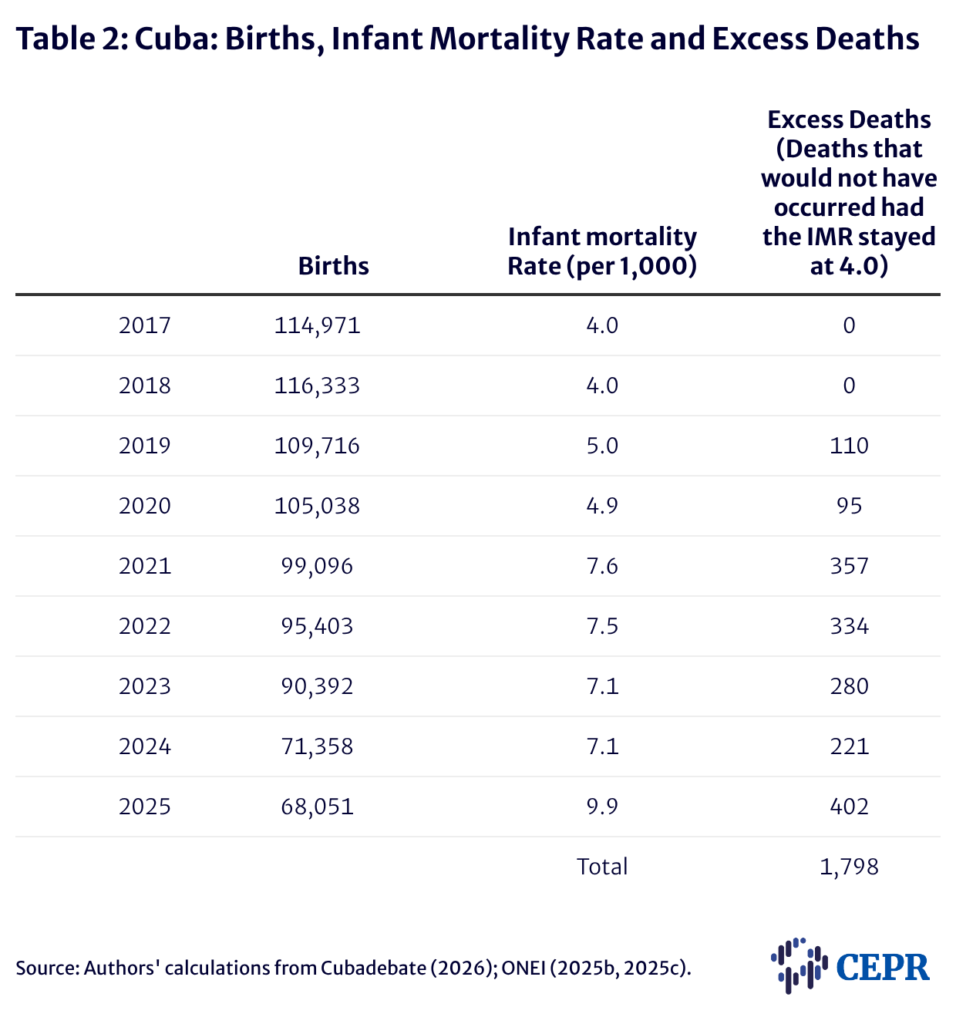
It’s worth noting that, like most countries in the world, the Cuban economy underwent a severe COVID-related contraction; gross domestic product (GDP) per capita growth was -10.7 percent in 2020, one of the worst in the region (Table 3). However, unlike most other countries in the region and around the world, Cuba did not subsequently experience a sizable post-COVID rebound during the years that immediately followed. Average annual GDP per capita growth from 2020 to 2024 was just 0.4 percent, as compared with the regional average of 3.2 percent. During this period, the quality of health care and access to health care services in Cuba sharply deteriorated amid widespread shortages of medicines and medical supplies and amid the departure of many health professionals.

In spring 2024, CEPR staff visited health care facilities in Cuba and observed firsthand some of the mounting challenges that the health care sector was experiencing. There were shortages of basic, critical medical supplies, such as syringes, inhalers, and even saline solution. At a cardiological center for children, we observed a toddler who needed to undergo a surgical operation that would have been avoidable had the center had access to catheters. We met a young doctor who lamented being the only graduate from his class that was still practicing medicine in Cuba, and he attributed this to the shrinking wages for doctors. At the National Oncological Institute we learned that medical staff were having great difficulty obtaining basic laboratory chemicals and were unable to access spare parts for radiotherapy equipment; as a result, they were unable to treat many cancer patients in a timely manner. The institute once had a total of 60 medical physicists (who were specialized in cancer treatment) and now had only 16. They previously had 16 anaesthesiologists and now had only five.
Since then, reports indicate that the situation in the Cuban health care sector has grown far worse. Due to a continuous increase in fuel shortages and electricity blackouts around Cuba, many hospitals have been unable to provide critical services, and all but vital surgeries have been put on hold. Ambulances are often unavailable for urgent care due to a lack of sufficient fuel. Medical providers in pediatric clinics have reported having to take small children off of ventilators during power shortages and manually pump air into their lungs in order to try to keep them alive.27
The direct and indirect impact of the tightening of US sanctions on Cuba that began in 2017 very likely played a substantial role in the extremely large jump in Cuba’s infant mortality rate.
Sanctions and Infant Mortality: What Recent Studies Tells Us
Over the past decade, Cuba has been subjected to a dramatic increase in the scope and intensity of sanctions imposed by the United States. The resulting negative effects on the Cuban economy, which we will look at in greater detail in the next section, would be expected to lead to increased mortality. There is also considerable empirical and statistical evidence that economic sanctions of the type imposed and intensified in Cuba over the past decade can cause substantial increases in deaths in target countries.
Most recently, an August 2025 study for The Lancet Global Health by economists Francisco Rodríguez, Silvio Rendón, and Mark Weisbrot estimated that broad, unilateral sanctions — mostly imposed by the United States — increased deaths in sanctioned countries by approximately 564,000 annually, based on a panel regression including 152 countries.28 This is comparable to worldwide annual deaths from armed conflict.29
This study incorporated a number of statistical methods to demonstrate the causal relationship between the sanctions imposed and the increased death rates that resulted.30
The Lancet Global Health study found that children under five years old accounted for 51 percent of the deaths caused by these sanctions. Infant mortality is generally about three-quarters of under-five mortality. So these numbers indicate a profound disproportionality in the impact of sanctions on infants as compared with other age groups; infants are only about 1.6 percent of the world population.31
This would indicate that a rise in infant mortality of the size that has taken place over the past decade in Cuba — or even greater — might be expected under the conditions that Cuba experienced during that period. There is other compelling statistical evidence that would also strongly indicate the sanctions that Cuba has been subjected to would cause a substantial increase in infant mortality. Some of this can be found in another study based on panel regressions and published by the Bank for International Settlements (BIS). It involves 180 countries and examines the relationship between recessions and mortality in emerging market and developing economies (EMDEs).32
These results are directly relevant to the relationship between sanctions and mortality. That is partly because economic slowdowns, recessions, depressions, and even hyperinflation — which is generally economically devastating — are among the most important types of economic damage from sanctions that increase death rates. In one of the most well-documented experiences of sanctions, Venezuela lost 74 percent of its GDP from 2012 to 2020,33 more than three times the contraction of the US economy during the Great Depression. Most of this was due to economic sanctions. The first year of the Trump administration’s sanctions on Venezuela (2017–18) saw an increase of 40,000 deaths,34 with many more in the years that followed.
Cutting a country off from most international financial markets, including normal levels of borrowing, would be expected to cause recessions. Fiscal and debt crises, balance of payments crises, and the loss of essential imports that are needed for production as well as for the maintenance of critical infrastructure often follow the loss of financial access. Direct restrictions on imports play a similar role in damaging the economy; in Cuba’s case this has been seen most acutely following the near-total blockade of oil imposed by the Trump administration over the past few months. Restrictions on exports and remittances can also contribute to recessions and balance of payment crises.
These ways in which sanctions cause, and worsen, recessions and crises mean that they will also spur higher levels of mortality through this economic impact. The statistical relationship between recessions and mortality therefore provides important statistical evidence for the impact of sanctions on mortality.
Economists at the BIS found that “child mortality rises in a highly significant way in recessions in EMDEs, by about 6 deaths per 1000 births.”35 The authors of the BIS paper define a recession for a country as a year in which the economy has negative growth.
Again, these numbers are for mortality of children under five years old. As mentioned above, about three-quarters of this mortality in the world is infant mortality, so this study implies that a recession would increase mortality by 4.5 deaths per 1,000 births. This is most of the increase that the data show for Cuba (from 4.0 to 9.9 or 5.9 deaths per 1,000 births) (see Table 2).
Of course there is considerable lethal impact of sanctions in Cuba that is not brought about through the impact of recessions: the lack of access to medicines and medical supplies; the breakdown of care that depends on electricity or fuel for transport; water, hygiene, and sanitation failures; and the loss of repair capacity or spare parts. Mosquito control, prenatal outreach, vaccination campaigns, and many other public health measures can be seriously weakened from the direct impact of sanctions, with or without a recession.36
It is worth noting the causal relationship between the sanctions inflicted on Cuba and the increase in infant mortality is pretty clear from observable, physical, medical, and other evidence — much of which is described below. Statistical studies, including the panel regressions cited here, provide further quantitative, empirical, and replicable evidence of the magnitude of deaths and harm caused by this economic violence, which has been accelerating in Cuba over the past decade.
The Economic and Social Impact of Recent US Cuba Policy
The United States has maintained an extensive economic embargo against Cuba since the early 1960s.37 While the effects of this embargo were widely felt on the island, for decades they were largely offset by preferential trade access, credit on favorable terms, and subsidies from the Soviet Union.38 The shock caused by the termination of Soviet economic support to Cuba in the early 1990s led to a deep and prolonged economic downturn.
In the years that followed, the US sanctions regime against Cuba intensified and was more difficult to remove through the passage of two key pieces of legislation. The 1992 Cuban Democracy Act (or Torricelli Act) blocked US aid to any country giving “assistance” to the government of Cuba, barred foreign subsidiaries of US firms from transacting with Cuba, and prohibited any ship that made a stop in Cuba from docking in the US for 180 days thereafter.39 The 1996 LIBERTAD (or Helms-Burton) Act codified the ongoing US embargo, which had mostly been imposed via executive action, into US law and, through Title III of the Act, included extraterritorial effects by creating potential liability for both US and foreign companies engaged in business with Cuban entities. In response to strong opposition from other countries, especially in Europe, President Bill Clinton and every subsequent US president blocked the application of Title III until, in 2019, President Donald Trump changed course and allowed it to be enforced.40
The sanctions regime began to be eased in the 2000s, a change that accelerated with the Obama administration’s policy of progressive normalization of relations with Cuba, announced in December 2014. Over the following months, the US reestablished diplomatic relations; removed Cuba from the State Sponsors of Terrorism list; softened travel and remittances restrictions; and loosened restrictions on exports, imports, and financial transactions. For example, foreign-made exports to Cuba from third-party countries were subject to US export controls if more than 10 percent of their content by value is of US origin (the de minimis rule).41 President Barack Obama raised this threshold to 25 percent. However, in part due to the Helms-Burton Act, the decades-old US embargo largely remained in place.
Trump 1.0: An Unprecedented Expansion of US Sanctions
After taking office in 2017, President Trump began to reverse key aspects of Obama’s normalization policy and progressively added new restrictive measures, leading to the most severe sanctions regime that Cuba had yet faced. First, a 2017 presidential memorandum created what came to be called the Cuba Restricted List, which identified Cuban entities for which all “direct or indirect” financial transactions were banned.42 It would be repeatedly expanded in the years that followed, with many of the sanctioned entities linked to Cuba’s vital tourism sector, including most major hotels.43 In 2019, the de minimis threshold was reduced back to 10 percent, significantly limiting Cuba’s access to many imported goods. Travel was further restricted with the end of an Office of Foreign Assets Control general license for “people-to-people” educational trips in 2019 — resulting in an abrupt decline in US tourism to the island and the end of all cruise-line travel there — and the suspension of charter flights from the US in 2020.44 Various restrictions on remittances culminated in Western Union, the only US entity authorized to manage private remittance flows, being forced to close its Cuban operations in 2020.45
Potentially the two most damaging sanction measures were the lifting of the suspension of the Helms-Burton Act’s Title III in May 2019 and the redesignation of Cuba as a State Sponsor of Terrorism (SSOT) in 2021, just before President Trump left office.
Title III entitles US citizens and entities (including citizens who were Cuban at the time of the nationalization) to sue third-party individuals and companies that have “trafficked” in property that was nationalized after the revolution. While there have been relatively few cases filed since 2019 — although there are two cases currently before the Supreme Court46 — Title III increases the risks of investing and trading with Cuban firms and reportedly has had a major chilling effect by deterring potential investment and business partnerships from all over the world.47
The re-inclusion of Cuba on the SSOT list in early 2021 caused wide-ranging disruption as risk-averse firms closed their Cuba operations.48 Many international financial institutions, which were already reluctant to engage with Cuba due to recent multibillion dollar fines against banks that violated sanctions, stopped processing transactions with Cuban entities and individuals.49 According to the Cuban government, between August 2021 and February 2022, “a total of 100 foreign banks were identified as being involved in 261 actions” that included “closing accounts and established banking contracts, returning transactions, refusing to create accounts,” and “canceling passwords for the exchange of financial information” through SWIFT.50 Even companies that conduct transactions permitted under US law, such as those engaged in exporting food to Cuba, can expect increased scrutiny from the US Securities and Exchange Commission because of the designation. Many businesses prefer avoiding the likely red tape they would encounter if they continued working with Cuban entities, even if doing so were entirely legal under US law.51
Cuba’s SSOT designation has also had a major impact on travel to Cuba. With the designation in place, foreign nationals from the 42 countries that qualify for visa-free travel to the US — through the US Electronic System for Travel Authorization (ESTA) — are required to apply for US visas if they travel to Cuba. This requirement deters tourism and business trips from ESTA-qualifying countries, including most European countries, the UK, Japan, Australia, Chile, New Zealand, Taiwan, South Korea, and Qatar, among others. This measure, along with increased restrictions on US travel to Cuba, severely hampered Cuba’s ability to recover from the COVID-19 shock that had decimated tourist arrival numbers and caused a proportional fall in tourist revenue, one of the primary sources of foreign income for the country.52

Health services exports via international medical “missions” have been another key target of US sanctions in recent years. Key Trump administration allies, President Jair Bolsonaro’s Brazil and President Nayib Bukele’s El Salvador, ended their countries’ medical cooperation programs with Cuba in late 2018 and in April 2019, respectively.53 From July 2019, the US began to impose visa restrictions on foreign officials involved in the programs.54 The US Department of State issued a statement in September 2019 calling on all countries to stop using Cuba’s medical missions.55 Subsequently, the governments of Ecuador and Bolivia also ended their missions.56 As the pandemic got underway, Senators Marco Rubio and Bob Menendez called on the Department of State to issue instructions to embassies encouraging governments to withdraw from these programs.57 US Secretary of State Mike Pompeo also pressured the Pan American Health Organization to investigate what he characterized as Cuba’s “slave trade in doctors.”58
The targeting of these medical missions by the US government causes harm not just to Cuba. The missions are directed at economically deprived and marginalized sectors of the populations of mostly poorer countries and the fees are based on solidaristic pricing, with some countries receiving the aid as donations.59 The missions’ work in West Africa during the Ebola crisis was particularly highly praised, including by the then-head of the World Health Organization (WHO) and by senior figures in the Obama administration.60 This mutually beneficial trade has been an important contribution to Cuba’s foreign currency revenues, and the attacks on the programs by the first Trump administration can be seen in the data, with medical services exports falling from $6.4 billion in 201861 to just under $4 billion in 2020.62
Income from tourism fell from $3.3 billion in 2017 to $2.6 billion in 2019,63 and it then fell drastically during the pandemic to just over $400 million in 2021, but by 2024 it had only recovered to $1.3 billion — just 40 percent of its 2017 level.64
In Chart 1, we can see how, between 2018 and 2024, the number of foreign visitors to Cuba has fallen dramatically both in absolute terms and relative to neighboring countries whose economies are also heavily reliant on income from tourism. From receiving 4.6 million international tourists in 2017 and 4.7 million in 2018, Cuba’s tourist arrivals fell sharply during the pandemic and had only partially recovered by 2024, with 2.2 million tourists arriving that year.65
Remittances, which are one of the main financing channels for the private sector,66 were restricted through caps, restrictions on recipients, and the addition of the main Cuban remittance processing firm to the State Department’s Cuba Restricted List in June 2020.67 The latter addition had the effect of forcing Western Union to exit the Cuban market, greatly complicating the sending of remittances to the island, causing a diversion toward informal and more costly channels.68 Transaction costs from other remittance agencies in Miami reportedly reached as high as 40 percent after the closure of Western Union (which had charged fees of about 11 percent).69 Remittances peaked at just over $4 billion in 2018; they then fell to $2.8 billion in 2020 and to just $1.8 billion in 2022.70 The remittances partially recovered — likely attributable to actions taken by the Biden administration — to $2.3 billion by 2024.71
A rough indicator of the economic decline since 2018 can be seen in import levels, changes in which can suggest changes in levels of domestic demand and, by implication, purchasing power. Imports of goods fell72 substantially from $11.5 billion in 2018 to $8.1 billion in 2024, a fall of almost 30 percent or 19 percent in per capita terms.73 There is a lack of detailed balance of payments data that could show the drivers of these changes with more confidence,74 but it is plausible that the hardening of US sanctions were a major factor as they reduced Cuba’s access to foreign currency,75 curtailed its access to credit, and raised the cost of imports. An econometric study of the period 1994–2020 found that the tightening of US sanctions against Cuba were associated with a statistically significant reduction in GDP and household consumption.76
The fall in Cuban imports is also likely understated in the official data. First, note that this is a nominal indicator; if adjusted for price inflation, the decline would be more dramatic. For example, if we deflate Cuba’s food imports by a price index, then food imports, which increased in nominal terms by 19 percent over the period 2018–2024, actually fell in real terms by 6 percent.77 Second, many of the sanctions raised the cost of international transactions. For example, the de minimis change has, in many cases, forced importers to source alternative, more expensive goods as the previously purchased imports contained more than 10 percent US-made components. Therefore, the volume of imports — data for which the Cuba National Statistics Office does not publish — could have fallen more sharply still.
The rise in out-migration from Cuba beginning in 2021 (Table 4) is likely another result of the sharp decline in living standards. According to Cuba’s statistics agency, the population fell by 13 percent,78 from 11.2 million in 2020 to 9.8 million in 2024,79 and this was led largely by a massive rise in net migration — which had ranged from 15,000 to 25,000 per year between 2015 and 2019, rising to hundreds of thousands annually from 2021.80 As a point of comparison, every year since 2021 has surpassed the previous peak in 1980, when (on net) 142,000 Cubans left during the Mariel Boatlift.81

Effects on Cuba’s Health Care Sector
Cuba’s health care sector has been particularly hard hit by the “maximum pressure” coercive economic measures imposed by US administrations since 2017. We previously noted the sharp degradation of health care services in the years that have followed. As we have seen, the expansion and tightening of US sanctions have played a substantial role in this deterioration of health conditions and services. In addition, during CEPR’s fact-finding trip to Cuba in March 2024, we learned more about how these sanctions have directly hampered the provision of health care by blocking, or greatly limiting, the procurement of essential medicines, inputs, supplies, and equipment.
For instance, not long before our 2024 visit to Cuba, the state enterprise MEDICuba — which imports and exports medicines and medical supplies for the state health care system — was forced to shut down a production line of vaccines for six months after a US company suspended the shipment of critical inputs. Similarly, Cuba has struggled to import many basic medical supplies, with formerly reliable suppliers suddenly halting shipments. The health care providers that we interviewed told us that in many cases this appeared to be the result of the Trump administration’s 2019 decision to lower the de minimis threshold from 25 percent to 10 percent, thereby prohibiting the export to Cuba of any goods containing more than 10 percent US-origin content. Given that the vast majority of medication, medical equipment, and many medical supplies contain more than 10 percent US-origin content (including US-patented technology or components), MEDICuba has had to seek medical goods from distant locations, often at higher-than-market rates and in many cases has been unable to find alternatives with less than 10 percent US-origin components.
Staff at Cuba’s primary pharmaceutical manufacturer and research facility — BioCubaFarma — recounted how the German company Sartorius — one of the world’s leading suppliers of lab equipment — abruptly stopped supplying the facility with filtration bags and other indispensable products once the 10 percent de minimis rule came into effect. They have struggled to find reliable alternative suppliers ever since.
The staff of various medical institutions also described the extreme difficulty that they’d had in obtaining credit lines to purchase essential medical goods following the Trump administration’s decision to put Cuba on the SSOT list — a designation that, as we have explained above, has led to many international financial institutions refusing to engage with Cuban entities. Staff at Cuba’s primary cardiological center for children recounted how, following the SSOT designation, it became extremely challenging to obtain financing for the purchase of supplies and medication. In another instance, medical practitioners recounted how there was suddenly a lack of HPV vaccines due to a foreign credit line having been suspended. Given how cash-strapped Cuba has become in recent years — in large part as a result of sanctions designed to reduce the country’s access to foreign exchange — the financial embargo resulting from the SSOT designation has greatly constrained medical providers’ ability to effectively meet the needs of their patients.
Trump 2.0: A Further Hardening of Sanctions and a Fuel Blockade
The second Trump administration has taken additional measures designed to further debilitate the Cuban economy with the goal of achieving regime change. On his first day in office, President Trump reversed two of President Joe Biden’s actions, one of which had begun the process for removing Cuba from the SSOT list and the other of which had eliminated the Cuba Restricted List. On January 29, 2025, Secretary of State Rubio withdrew Biden’s waiver of Title III of the Helms-Burton Act.82 On February 6, 2025, the administration reactivated the Cuba Restricted List.83 The list was also expanded with the inclusion of the main firm for processing remittances, which forced the exit of Western Union from Cuba and greatly complicated remittances to the island.84 Then, in June 2025, the administration tightened restrictions on transactions with Cuban entities and on US travel to Cuba.85 These measures further limited Cuba’s access to international financial markets and further dampened the flow of US visitors — and US dollars — to the island.
In addition, Secretary of State Rubio and other State Department officials have doubled down on their efforts to terminate Cuban medical missions abroad through sanctions or threats of sanctions on officials in host countries and other forms of pressure directed at host country governments. A senior Caribbean official told POLITICO that the State Department’s campaign has generated “a lot of fear” in the region86 and that US pressure — which has included the cancellation of US visas of foreign officials87 — has “never been this open.” As a result of this pressure campaign, Jamaica, Honduras, Guatemala, and Guyana have terminated decades-old Cuban medical missions, leading to the departure of well over 1,000 Cuban medical professionals who had been providing primary care services to primarily low-income communities in those countries.88 After the US military intervention in Venezuela, the new Venezuelan government also began to send back Cuban doctors, after pressure from the US.89
But by far the most devastating President Trump policy has been the US de facto blockade on all Cuban imports of fuel, which has effectively been in place since the beginning of 2026. First, following the US military intervention in Caracas, Venezuela, on January 3, the US administration blocked oil shipments from Venezuela, which had been Cuba’s primary fuel supplier for most of the past three decades.90 Then President Trump signed an executive order declaring a “national emergency,” identifying Cuba as an “unusual and extraordinary threat” to the national security of the United States and providing for economic retaliation — in the form of high tariffs — against countries supplying the island with oil, particularly Mexico, which reportedly overtook Venezuela as Cuba’s largest supplier of oil in 2025.91 Although the US Supreme Court barred the administration from imposing tariffs through national emergency declarations in February, the Trump administration has prevented oil shipments — except for one tanker from Russia at the end of March92 — from reaching the island, as the New York Times and other outlets have reported.93
These new President Trump measures, and particularly the current oil blockade, have had a dramatic effect on the economy and on basic services on the island. Given that the majority of Cuba’s electricity generation is reliant on foreign oil products, the country has been wracked by increasingly frequent and prolonged power outages.94 On March 16, the entire island experienced an electrical blackout.95 Fuel shortages have led to rationing that has paralyzed much public transportation and caused long lines at gas stations.96
The health care sector has been particularly affected, with hospitals only performing emergency surgeries.97 Five million Cubans — about half of the population — have chronic conditions and could have their medications or treatments affected, with oncology, cardiovascular care, and kidney disease already facing a heavy impact from the shortages of fuel.98 NBC reported in March that 300 ambulances were sitting idle due to lack of fuel or spare parts for maintenance, leaving only 25 electric ambulances available for the entire country.99 In February, one general practioner quoted in the British Medical Journal said:
The healthcare system is in total collapse. Working conditions are dreadful: healthcare staff are not provided with food, and sometimes not even drinking water; the bed linen is dirty; there are no fans in hot weather. In addition, there are no gloves, protective equipment, or face masks for staff. There is a shortage of doctors, nurses, and health technicians, as well as half of the basic medicines and essential medical supplies. There are power outages and no way to communicate by mobile phone or landline. It feels like a country at war.100
According to recent news reports, power outages are greatly limiting the use of X-ray machines, ultrasounds, CT scans, and other diagnostic imaging tools.101 Many medicines, vaccines, and medical supplies such as blood require refrigeration or freezing; in March, the WHO’s Director-General highlighted the emergence of problems in the cold chain for vaccines caused by the fuel blockade.102 While hospitals have backup generators, which are usually diesel-run, there are delays of a few minutes before these kick in after power cuts, complicating vital life-support machines — for example, in neonatal units, nurses have to rush to manually pump ventilators for premature babies.103 In late February, a young pregnant woman being treated for anemia in a maternal health clinic told the AP, “there’s been a drastic change since January. . . . There’s no bread, no milk for nutrition. . . , no medicines.”104
At the same time, reports suggest that the general health of the Cuban population has declined as a result of malnutrition and the sharp deterioration of sanitary conditions. These conditions stem in part from the lack of sufficient power to pump water into buildings and the accumulation of waste in public spaces, due to a shortage of fuel with which to operate sanitation vehicles.105 Shortages of electricity affect food storage, increasing spoilage and the risk of foodborne illness. This latter risk is also raised by the lack of cooking fuels; as an alternative, Cubans are reportedly using wood and other more polluting fuels106 — even burning trash107 — which worsens air quality and can provoke respiratory illness, particularly for vulnerable populations such as infants.108
Cuba is experiencing an unprecedented nationwide surge in mosquito-borne illnesses, such as chikungunya, Dengue fever, and oropouche.109 One-third of the population is estimated to have experienced infection from an arbovirus such as these.110 The severity of these outbreaks is likely a product of the sanctions. Shortages of fuel and insecticide have prevented the massive fumigation campaigns previously used to keep the mosquito populations carrying these diseases in check.111 A typical response to disruption in the water supply is to store water in containers, which are ideal breeding spots for disease-carrying mosquitos.112
Given the increasingly dire state of Cuba’s health care system and the decline in the state of health of the general population, it is highly likely that Cuba’s infant mortality rate has increased significantly since 2025 when it had reached 9.9 per 1,000 live births.113 Other key health indicators, like life expectancy and maternal mortality, are highly likely to have also deteriorated since the beginning of the year.
A recent New York Times report on the effects of the US fuel blockade on Cuba’s energy sector noted that, in Cuba’s leading maternity hospital,
Doctors, nurses, cleaners and mothers all struggle to get to the hospital because of the lack of fuel. This translates into dirtier delivery rooms, fewer health workers to deliver babies and mothers arriving after labor is dangerously far along.
“We are receiving much more severe cases,” [obstetrician-gynecologist] Dr. Delgado Peruyera said, noting that three newborns died in February, the most she could ever recall in one month.114
Conclusion
In early 2019, New York Times columnist Nicholas Kristof wrote that “an American infant is, by official statistics, almost 50 percent more likely to die than a Cuban infant.”115 He noted that “Cuba achieves excellent health outcomes even though the American trade and financial embargo badly damages the economy and restricts access to medical equipment.” Today, Kristof’s observations are no longer valid. Last year, Cuba’s IMR was 83 percent higher than the US’s, and reports suggest that it has risen to even higher levels over the last few months. The Cuban health care system has been deeply affected by dire shortages of supplies, medicine, personnel, and — as of the last few months — fuel and electricity.
As the evidence in this paper indicates, the primary cause of the unprecedented rise in Cuba’s IMR, and the crisis in its once robust health care system, is almost certainly the hardening of US sanctions that began in 2017 and increased steadily in the years thereafter, with only a minor easing during the Biden administration. These measures, which have been imposed on top of the long-standing US trade and financial embargo, include the ever-expanding Cuba restricted entities list, the tightening of the de minimis threshold for imports to Cuba, the re-inclusion of Cuba on the SSOT list, the application of Title III of the Helms-Burton Act, and sanctions targeting Cuba’s medical missions, among other measures.
Together, these “maximum pressure” policies have vastly restricted Cuba’s access to foreign exchange and to essential imports and have contributed to a severe decline in Cubans’ standard of living and in the quality of basic services — especially health care. In these conditions, studies show that infant mortality — and mortality generally — can be expected to rise. For hundreds of thousands of Cubans, the only viable option has been to migrate to the US and other countries, in what has been the biggest wave of out-migration in Cuba’s contemporary history. Others, including at least 1,800 children under the age of one, have died.
The current US fuel blockade, which has prevented nearly all fuel shipments from reaching Cuba, has made an already dire situation much worse. More infants — more vulnerable people — can be expected to die as a result.
Two US legislators who recently visited Cuba noted, “this is cruel collective punishment — effectively an economic bombing of the infrastructure of the country — that has produced permanent damage. . . . We do not believe that the majority of Americans would want this kind of cruelty and inhumanity to continue in our name.”116
Legislators in both the US House and Senate have introduced legislation that would mandate the end of US participation in the current blockade on the grounds that it is illegal and unconstitutional under US law.117 This is because it involves the US military in hostilities without congressional authorization.
In international law, the US naval blockade of Cuba, which has been enacted through both threats exerted on third party states and corporations, and the physical interception of oil tankers en route to Cuba,118 is clearly an unlawful use of force, as stipulated in Article 2(4) of the United Nations Charter.119 It also violates the Charter of the Organization of the American States’s prohibition of coercive measures of an economic or political character (Article 20).120
Naval blockades are also typified in United Nations General Assembly Resolution 3314 as acts of aggression (Article 3).121 The resolution defines aggression as “the use of armed force by a State against the sovereignty, territorial integrity, and political independence of another State” (Article 1). As a result of this use of armed force, the United States is now engaged in an armed conflict,122 as defined under Common Article 2 of the Geneva Conventions. The Fourth Geneva Convention strictly prohibits the collective punishment of civilians in any armed conflict. This can be prosecuted as a war crime.
References
Acosta, Luis Jaime. 2019. “Colombia Bombing, Extradition Request Roil Already Stagnant Peace Talks.” Reuters, January 23. https://www.reuters.com/article/world/colombia-bombing-extradition-request-roil-already-stagnant-peace-talks-idUSKCN1PH2GM/
Albizu-Campos, Juan Carlos. 2025. “Cuba: ¿Crisis demográfica o sistémica?” Horizonte cubano, April 17. https://horizontecubano.law.columbia.edu/news/cuba-crisis-demografica-o-sistemica
Associated Press. 2026a. “Concern Grows as Cuba Restricts Public Transportation in Response to Oil Crisis Following Threats from the US.” February 6. https://newsroom.ap.org/editorial-photos-videos/detail?itemid=d2ddc1d281d94d08aa262af276790c01&mediatype=video
———. 2026b. “Jamaica to End Decades-Long Agreement with Cuba over Medical Missions Criticized by U.S.” March 5. https://www.greenfieldreporter.com/2026/03/05/jamaica-to-end-decades-long-agreement-with-cuba-over-medical-missions-criticized-by-us/
Augustin, Ed, and Jack Nicas. 2026. “Cuban Patients Are Dying Because of U.S. Blockade, Doctors Say.” The New York Times, March 26, 2026. https://www.nytimes.com/2026/03/26/world/americas/cubas-health-system-us-oil-blockade.html
Baggott, Rob, and George Lambie. 2019. “Hard Currency, Solidarity, and Soft Power: The Motives, Implications, and Lessons of Cuban Health Internationalism.” International Journal of Social Determinants of Health and Health Services 49 (1): 19–34. https://doi.org/10.1177/0020731418805378
BBC. 2026. “BBC Looks at How Cubans Are Living with Fuel Shortages.” Video, 1 min., 42 sec. https://www.bbc.com/news/videos/cn0ewj0e7j1o
Beldarraín Chaple, Enrique, and Mary Anne Mercer. 2017. “The Cuban Response to the Ebola Epidemic in West Africa: Lessons in Solidarity.” International Journal of Social Determinants of Health and Health Services 47 (1): 130–146. https://doi.org/10.1177/0020731416681892
Blanco, Silvia. 2026. “Cuba, al borde de la parálisis: ‘Siento que es el final de la película’.” El País, February 22. https://elpais.com/america/2026-02-22/viaje-a-una-cuba-al-borde-de-la-paralisis-siento-que-es-el-final-de-la-pelicula.html
Center for Economic and Policy Research (CEPR). 2026. “Feb. 23, 10:20 AM entry.” In US Escalation in the Caribbean and Latin America — Live Updates. February 23. https://cepr.net/publications/americas-live-updates/#feb231020am
CiberCuba Editorial Team. 2026. “Remittances in Cuba: 7 Key Points to Understand What Changes and What Doesn’t When Receiving Dollars at Cadeca.” CiberCuba, April 7. https://en.cibercuba.com/noticias/2026-04-07-u1-e199370-s27061-nid325197-remesas-cuba-7-claves-entender-cambia-al-recibir
Colomé, Carla Gloria. 2025. “Dengue, Oropouche y chikungunya: una crisis epidemiológica tiene en vilo a Cuba.” El País, October 16. https://elpais.com/america/2025-10-16/dengue-oropouche-chikungunya-una-crisis-epidemiologica-tiene-en-vilo-a-cuba.html
Cubadebate. 2026. “Cuba 2025 cierra con una tasa de mortalidad infantil de 9.9 por cada mil nacidos vivos.” January 2. http://www.cubadebate.cu/noticias/2026/01/02/cuba-2025-cierra-con-una-tasa-de-mortalidad-infantil-de-9-9-por-cada-mil-nacidos-vivos/
Cuban Democracy Act of 1992, H.R. 5323, 102nd Cong. (1992). https://www.congress.gov/bill/102nd-congress/house-bill/5323/text
Delgado, Denisse. 2024. “Remittance Behaviors Among Cuban Migrants in Miami and Madrid: Motivations, Practices and Experiences.” PhD diss., University of Massachusetts Boston.
Departamento Administrativo Nacional de Estadística (DANE). 2026. Boletín técnico: Estadísticas Vitales (EEVV). Nacimientos y defunciones no fetales. Cifras año acumulado 2025pr (enero-diciembre). March 20. https://www.dane.gov.co/files/operaciones/EEVV/2026/20-mar-2026/bol-EEVV-IIsem2025pr.pdf
Diario Las Américas. 2019. “Cuba retira misión de médicos en El Salvador tras negación de permisos.” April 24. https://www.diariolasamericas.com/america-latina/cuba-retira-mision-medicos-el-salvador-negacion-permisos-n4176181
Dirección de Estadísticas e Información en Salud (DEIS). 2026. Estadísticas vitales: información básica — Año 2024. Serie 5, no. 68. Accessed April 10, 2026. https://www.argentina.gob.ar/sites/default/files/serie_5_nro_68_anuario_vitales_2024_v2.pdf
Doerr, Sebastian, and Boris Hofmann. 2022. “Recessions and Mortality: A Global Perspective.” Economics Letters 220 (November): 110860. https://doi.org/10.1016/j.econlet.2022.110860
Domínguez López, Ernesto, Ariadna Cornelio Hitchman, and Seida Barrera Rodríguez. 2025. “The Activation of the Title III of the Helms-Burton Act: The Making of a Policy.” International Journal of Cuban Studies 17 (1): 45–69. https://www.jstor.org/stable/48829653
Durán, Milexsy, and Dánica Coto. 2026. “Islandwide Blackout Hits Cuba as Island Struggles with Deepening Energy Crisis.” Los Angeles Times, March 16. https://www.latimes.com/world-nation/story/2026-03-16/islandwide-blackout-hits-cuba-as-island-struggles-with-deepening-energy-crisis
Economic Commission for Latin America and the Caribbean (ECLAC). 2023. “Recommendations on Remittances.” CIFFRA Policy Note no. 15. Accessed April 13, 2026. https://www.cepal.org/sites/default/files/project/files/ude-a2023-03-23-ndep-15-cuba-recommonremittances-eng.pdf
Edelson, Ed. 2009. “Wood Fires Can Harm the Youngest Lungs.” ABC News, November 6. https://abcnews.com/Health/Healthday/wood-fires-harm-youngest-lungs/story?id=9018497
Escobedo, Angel A., Cristians Auza-Santiváñez, Raisa Rumbaut, Maurizio Bonati, and Imti Choonara. 2021. “Cuba: Solidarity, Ebola and COVID-19.” BMJ Paediatrics Open 5 (1): e001089. https://pmc.ncbi.nlm.nih.gov/articles/PMC8136810/
Escobedo, Angel Arturo, Yaxsier de Armas, Paul Jonas, and Imti Choonara. 2026. “Impact of Economic Sanctions on Child Health in Cuba.” BMJ Paediatrics Open 10 (1): e004510. https://doi.org/10.1136/bmjpo-2026-004510
Food and Agriculture Organization of the United Nations (FAO). 2026. “FAO Food Price Index.” https://www.fao.org/worldfoodsituation/foodpricesindex/en/
Ghebreyesus, Tedros Adhanom. 2026. “The situation in #Cuba is deeply concerning as the country struggles to maintain health service delivery.” X, June 20. https://x.com/DrTedros/status/2036911681411178874
González, Marlon. 2026. “Cuban Doctors Leave Honduras as Trump Pushes to Isolate the Island.” Associated Press, March 5. https://apnews.com/article/honduras-cuban-doctors-e860064a52dfb79d5500d5b849e61066
Gordon, Joy. 2024. “Cuba’s Economic Crisis: US Sanctions and the Problem of ‘Overcompliance’.” Le Monde diplomatique (English ed.), October 7. https://mondediplo.com/outside-in/cuba-overcompliance
Government of Canada, Trade Commissioner Service. 2024. “Exporting to Cuba.” September 4. https://www.tradecommissioner.gc.ca/en/market-industry-info/search-country-region/country/canada-cuba-export/exporting.html
Hernández-Catá, Ernesto. 2001. “The Fall and Recovery of the Cuban Economy in the 1990s: Mirage or Reality?” IMF Working Paper 01/48. International Monetary Fund. https://www.elibrary.imf.org/view/journals/001/2001/048/article-A001-en.xml
———. 2019. “Swapping Petroleum for Doctors and the Impact of Cutbacks in Venezuelan Oil Deliveries.” Paper presented at the Annual Conference of the American Economic Association, San Diego, January 2020. https://www.aeaweb.org/conference/2020/preliminary/paper/N8fA9f2Z
Instituto Brasileiro de Geografia e Estatística (IBGE). n.d. “Tábua completa de mortalidade para o Brasil: análises e tabelas.” Accessed April 10, 2026. https://biblioteca.ibge.gov.br/index.php/biblioteca-catalogo?view=detalhes&id=73097
Instituto Nacional de Estadística y Geografía (INEGI). 2024. Encuesta Nacional de la Dinámica Demográfica (ENADID) 2023: principales resultados. July 19. https://www.inegi.org.mx/contenidos/programas/enadid/2023/doc/resultados_enadid23.pdf
International Committee of the Red Cross (ICRC). 1949. Geneva Convention (IV) relative to the Protection of Civilian Persons in Time of War. “Article 33: Individual responsibility, collective penalties, pillage, reprisals.” https://ihl-databases.icrc.org/en/ihl-treaties/gciv-1949/article-33
International Monetary Fund (IMF). 2026. “World Economic Outlook (WEO).” IMF Data. https://data.imf.org/en/datasets/IMF.RES:WEO
Jayapal, Pramila, and Jonathan Jackson. 2026. “Jayapal, Jackson Statement on Delegation to Cuba.” Office of Congresswoman Pramila Jayapal, April 5. https://jayapal.house.gov/2026/04/05/jayapal-jackson-statement-on-delegation-to-cuba/
Kristof, Nicholas. 2019. “Why Infants May Be More Likely to Die in America Than Cuba.” The New York Times, January 18. https://www.nytimes.com/2019/01/18/opinion/sunday/cuba-healthcare-medicare.html
Levine, Ally J., Travis Hartman, Tiana McGee, and Marianna Parraga. 2026. “Cuba Runs on Oil, and the Oil Is Running Out.” Reuters Graphics, April 8. https://www.reuters.com/graphics/CUBA-CRISIS/OIL-EXPLAINER/gkvlkjgxkpb/
Li, Yue-Zhen, Beth Peters, Stephen Propst, Deborah Wei, and Andrea Fraser-Reid. 2025. “U.S. State Department Reinstates Cuba Restricted List.” Hogan Lovells, February 19. https://www.hoganlovells.com/en/publications/us-state-department-reinstates-cuba-restricted-list
Marimow, Ann E. 2025. “Justices Strike Down Trump’s Tariffs.” The New York Times, February 20. https://www.nytimes.com/2025/02/20/us/politics/supreme-court-trump-tariffs.html
Marsh, Sarah, and John Zodzi. 2020. “FEATURE-Cuba Punches above Weight with ‘White Coat Army’ during Pandemic.” Reuters, September 15. https://www.reuters.com/world/feature-cuba-punches-above-weight-with-white-coat-army-during-pandemic-2020-09-15/
Médecins Sans Frontières (MSF). n.d. “Blockade.” The Practical Guide to Humanitarian Law. Accessed April 22, 2026. https://guide-humanitarian-law.org/content/article/3/blockade/
Menendez, Bob, and Marco Rubio. 2020. “Menendez, Rubio Raise Concerns about Cuba’s Forced Labor Scheme, Urge Pompeo to Direct U.S. Embassies to Engage Host Governments.” United States Senate Committee on Foreign Relations, May 6. https://www.foreign.senate.gov/press/dem/release/menendez-rubio-raise-concerns-about-cubas-forced-labor-scheme-urge-pompeo-to-direct-us-embassies-to-engage-host-governments
Ministry of Foreign Affairs of Cuba (MINREX). 2022. “Update to the Report of Cuba on Resolution 75/289 of the United Nations General Assembly Entitled ‘Necessity of Ending the Economic, Commercial and Financial Blockade Imposed by the United States of America against Cuba’.” October 19. https://cubaminrex.cu/en/update-report-cuba-resolution-75289-united-nations-general-assembly-entitled-necessity-ending
Nicas, Jack, and Christiaan Triebert. 2026. “A New U.S. Blockade Is Strangling Cuba.” The New York Times, February 20. https://www.nytimes.com/2026/02/20/world/americas/cuba-oil-blockade-trump.html
Novaes, Carolina, and Cássio A. de Sousa. 2022. “Aedes Aegypti—Insights on the Impact of Water Services.” International Journal of Environmental Research and Public Health 19 (22): 15127. https://pmc.ncbi.nlm.nih.gov/articles/PMC9682355/
Organization of American States (OAS). 1993. “Charter of the Organization of American States (A-41),” Articles 19 and 20. http://www.oas.org/en/sla/dil/inter_american_treaties_A-41_charter_OAS.asp
O’Boyle, Brendan. 2018. “Thousands of Cuban Doctors Depart Brazil Leaving Millions without Medical Care.” The Irish Times, November 23. https://www.irishtimes.com/news/world/thousands-of-cuban-doctors-depart-brazil-leaving-millions-without-medical-care-1.3708043
Oficina Nacional de Estadística e Información (ONEI). 2019. “8.13 Valor del comercio exterior de servicios exportados por divisiones.” In Anuario Estadístico de Cuba 2018, Edición 2019. Accessed April 13, 2026. https://www.onei.gob.cu/sites/default/files/publicaciones/2023-01/aec_2018_0_compressed.pdf
———. 2020a. “8.3 Intercambio total y saldo comercial.” In Anuario Estadístico de Cuba 2019, Edición 2020. https://www.onei.gob.cu/sites/default/files/publicaciones/2023-01/anauario_2019_compressed.pdf
———. 2020b. “8.13 Valor del comercio exterior de servicios exportados por divisiones.” In Anuario Estadístico de Cuba 2019, Edición 2020. https://www.onei.gob.cu/sites/default/files/publicaciones/2023-01/anauario_2019_compressed.pdf
———. 2022. “15.15 Ingresos asociados al turismo internacional.” In Anuario Estadístico de Cuba 2021, Edición 2022. Accessed April 13, 2026. https://www.onei.gob.cu/sites/default/files/publicaciones/2023-04/aec-2021-edicion-2022_compressed.pdf
———. 2023a. “8.10 Importaciones de mercancías según secciones de la Clasificación Uniforme para el Comercio Internacional (CUCI).” In Anuario Estadístico de Cuba 2022, Edición 2023. https://www.onei.gob.cu/sites/default/files/publicaciones/2024-04/aec-2022.pdf
———. 2023b. “8.13 Valor del comercio exterior de servicios exportados por divisiones.” In Anuario Estadístico de Cuba 2022, Edición 2023. Accessed April 13, 2026. https://www.onei.gob.cu/sites/default/files/publicaciones/2024-04/aec-2022.pdf
———. 2025a. Anuario Estadístico de Cuba 2024: Sector externo, Edición 2025. Accessed April 13, 2026. https://www.onei.gob.cu/sites/default/files/publicaciones/2025-10/08-sector-externo_aec2024_0.pdf
———. 2025b. “1.1.1 Población residente por sexo. Tasa anual de crecimiento y razón por sexo según años calculados.” In Anuario Estadístico de Cuba 2024, Sector Externo, Edición 2025. Accessed April 9, 2026. https://www.genero.onei.gob.cu/static/documents/informes/00-anuario-demografico-2024.pdf
———. 2025c. “2.1 Nacidos vivos y tasa bruta de natalidad. Cuba, años 1966–2024.” In Anuario Estadístico de Cuba 2024, Sector Externo, Edición 2025. Accessed April 9, 2026. https://www.onei.gob.cu/sites/default/files/publicaciones/2025-07/00-anuario-demografico-2024.pdf
———. 2025d. “3.1 Defunciones generales e infantiles por sexo, tasa de mortalidad general y tasa de mortalidad infantil, años 1970–2024.” In Anuario Estadístico de Cuba 2024, Sector Externo, Edición 2025. Accessed April 9, 2026. https://www.onei.gob.cu/sites/default/files/publicaciones/2025-07/00-anuario-demografico-2024.pdf
———. 2025e. “6.2 Saldo migratorio externo por sexo y tasa de saldo migratorio externo. Años 1969–2024.” In Anuario Estadístico de Cuba 2024, Sector Externo, Edición 2025. Accessed April 9, 2026. https://www.genero.onei.gob.cu/static/documents/informes/00-anuario-demografico-2024.pdf
———. 2025f. “8.4 Intercambio total y saldo comercial de mercancías.” In Anuario Estadístico de Cuba 2024, Sector Externo, Edición 2025. Accessed April 13, 2026. https://www.onei.gob.cu/sites/default/files/publicaciones/2025-10/08-sector-externo_aec2024_0.pdf
———. 2025g. “8.11 Importaciones de mercancías según secciones de la Clasificación Uniforme para el Comercio Internacional (CUCI).” In Anuario Estadístico de Cuba 2024, Sector Externo, Edición 2025. https://www.onei.gob.cu/sites/default/files/publicaciones/2025-10/08-sector-externo_aec2024_0.pdf
———. 2025h. “8.14 Valor del comercio exterior de servicios exportados.” In Anuario Estadístico de Cuba 2024, Sector Externo, Edición 2025. Accessed April 13, 2026. https://www.onei.gob.cu/sites/default/files/publicaciones/2025-10/08-sector-externo_aec2024_0.pdf
———. 2025i. “15.14 Ingresos asociados al turismo internacional.” In Anuario Estadístico de Cuba 2024, Sector Externo, Edición 2025. Accessed April 13, 2026. https://www.onei.gob.cu/sites/default/files/publicaciones/2025-08/15-turismo_aec2024.pdf
OnCuba Staff. 2026. “More than 96,000 Patients Await Surgery amid U.S. Oil Embargo, Warns Health Minister.” OnCubaNews, March 14. https://oncubanews.com/en/cuba/more-than-96000-patients-await-surgery-amid-u-s-oil-embargo-warns-health-minister/
Ortagus, Morgan. 2019. “Visa Actions Against Cuban Officials Exploiting Cuban Doctors.” Press statement, US Department of State, September 30. https://2017-2021.state.gov/visa-actions-against-cuban-officials-exploiting-cuban-doctors
Parraga, Marianna, and Dave Sherwood. 2025. “Cuba Struggles to Ease Power Cuts amid Reduced Fuel Supplies from Venezuela, Mexico.” Reuters, November 20. https://www.reuters.com/business/energy/cuba-struggles-ease-power-cuts-amid-reduced-fuel-supplies-venezuela-mexico-2025-11-19/
Pompeo, Michael R. 2020. “Secretary Michael R. Pompeo at a Press Availability.” Remarks to the Press, US Department of State, July 8. https://2017-2021.state.gov/secretary-michael-r-pompeo-at-a-press-availability-9/?safe=1
———. 2021. “U.S. Announces Designation of Cuba as a State Sponsor of Terrorism.” Press release, US Department of State, January 11. https://2017-2021.state.gov/u-s-announces-designation-of-cuba-as-a-state-sponsor-of-terrorism/
Reidpath, Daniel D., and Pascale Allotey. 2003. “Infant Mortality Rate as an Indicator of Population Health.” Journal of Epidemiology and Community Health 57 (5): 344–46. https://pmc.ncbi.nlm.nih.gov/articles/PMC1732453/pdf/v057p00344.pdf
Reuters. 2020. “Western Union Says Suspending U.S. Transfers to Cuba.” November 14. https://www.reuters.com/world/americas/western-union-says-suspending-us-transfers-cuba-2020-11-14/
———. 2025. “Las fuerzas de seguridad cubanas abandonan Venezuela mientras aumenta la presión de EE.UU.” October 19. https://es-us.noticias.yahoo.com/fuerzas-seguridad-cubanas-abandonan-venezuela-134243270.html
———. 2026. “Guatemala to Wind Down Cuban Doctors Program This Year.” February 10. https://duke.fm/2026/02/10/guatemala-to-wind-down-cuban-doctors-program-this-year-2/
Rodríguez, Andrea, and Milexsy Durán. 2026. “Cuba’s Health Care System Pushed to the Brink by US Fuel Blockade, Cuban Minister Says.” Associated Press, March 14. https://apnews.com/article/cuba-health-care-us-energy-embargo-crisis-33ad8447dc4b442ea9b614eb91392be5
Rodríguez, Francisco, Silvio Rendón, and Mark Weisbrot. 2025. “Effects of International Sanctions on Age-Specific Mortality: A Cross-National Panel Data Analysis.” The Lancet Global Health 13 (8): e1358–e1366. https://www.thelancet.com/journals/langlo/article/PIIS2214-109X(25)00189-5/fulltext
Rodríguez Rodríguez, Raúl. 2025. “The Impact of US Sanctions on Cuba’s Economic Development.” In The Economic Impact of US Sanctions on Cuba: Past, Present, and Future, 153–68. Cambridge, MA: Cambridge University Press. https://doi.org/10.1017/9781108915632.010
Rotstein, Jason. 2019. “The Legacy of the Libertad Act: Defeating Title III Claims and Protecting International Comity.” Harvard International Law Journal (blog), November 18. https://journals.law.harvard.edu/ilj/2019/11/the-legacy-of-the-libertad-act-defeating-title-iii-claims-and-protecting-international-comity/
Rubio, Marco. 2025a. “Expansion of Visa Restrictions Policy for Individuals Exploiting Cuban Labor.” Press statement, US Department of State, February 25. https://www.state.gov/expansion-of-visa-restrictions-policy-for-individuals-exploiting-cuban-labor
———. 2025b. “Restoring a Tough U.S.-Cuba Policy.” US Department of State, June 30. https://www.state.gov/restoring-a-tough-u-s-cuba-policy
Shepardson, David. 2022. “U.S. Lifts Cuba Flight Restrictions Imposed under Trump.” Reuters, June 1. https://www.reuters.com/world/americas/us-lifts-cuba-flight-restrictions-imposed-under-trump-administration-2022-06-01/
Solis, George, Mary Murray, and Carmen Sesin. 2026. “In a Cuban Hospital, Patients and Doctors Are Hard Hit by Outages and Fuel Shortages.” NBC News, March 18. https://www.nbcnews.com/world/cuba/inside-cuba-hospital-outages-hard-hit-blackouts-rcna264184
Statistical Institute of Jamaica (STATIN). n.d. “Infant Mortality Rate, Under Five Mortality Rate and Maternal Mortality Rate.” In Health Statistics. Accessed April 10, 2026. https://statinja.gov.jm/demo_socialstats/health.aspx
Taylor, Ivan. 2025. “Western Union Suspends Money Transfers to Cuba Following U.S. Sanctions.” CBS Miami, February 11. https://www.cbsnews.com/miami/news/western-union-suspends-money-transfers-to-cuba-following-u-s-sanctions/
Taylor, Luke. 2025. “Cuba Hit by Surge of Dengue and Other Infectious Diseases.” BMJ 391: r2688. https://doi.org/10.1136/bmj.r2688
———. 2026. “Cuba Health Crisis: Blackouts and Fuel Shortages Following Trump Pressure.” BMJ 392: s383. https://www.bmj.com/content/392/bmj.s383?hwshib2=authn%3A1775250496%3A20260402%253Ad4df3910-c111-44c7-bddc-7229fbacb4c4%3A0%3A0%3A0%3ADMkRNb8AXie1Ce%2FWnCEcQQ%3D%3D
Toosi, Nahal, and Eric Bazail-Eimil. 2026. “Cuban Doctors, U.S. Pressure.” POLITICO, March 13. https://www.politico.com/news/2026/03/13/cuban-doctors-us-pressure-00827683
Trotta, Daniel. 2026. “Cuban Doctors Endure Burnout, Blackouts as Once-Vaunted Healthcare Declines.” Reuters, March 26. https://www.reuters.com/business/healthcare-pharmaceuticals/cuban-doctors-endure-burnout-blackouts-once-vaunted-healthcare-declines-2026-03-26/
United Nations. 2026. “Humanitarian Pressures Grow as Cuba Continues to Struggle with Energy Shortages.” February 26. https://news.un.org/en/story/2026/02/1167046
———. 1945. Charter of the United Nations. https://www.un.org/en/about-us/un-charter/full-text
United Nations, Department of Economic and Social Affairs, Population Division (UN DESA). 2024. World Population Prospects 2024: Summary of Results. https://population.un.org/wpp/assets/Files/WPP2024_Summary-of-Results.pdf.
———. 2025. World Fertility 2024. https://www.un.org/development/desa/pd/sites/www.un.org.development.desa.pd/files/undesa_pd_2025_wfr_2024_final.pdf
United Nations General Assembly. 1974. “Definition of Aggression.” A/RES/3314 (XXIX), December 14, 1974. https://docs.un.org/en/A/RES/3314%20(XXIX)
United Nations Trade and Development (UNCTAD). n.d. “UNCTADstat Data Centre: Remittances.” Accessed April 13, 2026. https://unctadstat.unctad.org/datacentre/dataviewer/US.Remittances
UN Tourism. n.d. “UN Tourism Tourism Data Dashboard.” Accessed April 9, 2026. https://www.untourism.int/tourism-data/un-tourism-tourism-dashboard
US Department of State. 2025a. “Cuba Restricted List.” January 16, 2025. https://www.state.gov/division-for-counter-threat-finance-and-sanctions/cuba-restricted-list
———. 2025b. “Publishing the State Department’s List of Entities and Subentities Associated With Cuba (Cuba Restricted List).” Federal Register 90, no. 24 (February 6): 9101–3. https://www.federalregister.gov/documents/2025/02/06/2025-02282/publishing-the-state-departments-list-of-entities-and-subentities-associated-with-cuba-cuba
US Department of State, Office of the Historian. n.d. “499. Memorandum From the Deputy Assistant Secretary of State for Inter-American Affairs (Mallory) to the Assistant Secretary of State for Inter-American Affairs (Rubottom).” In Foreign Relations of the United States, 1958–1960, Cuba, Volume VI. Accessed April 13, 2026. https://history.state.gov/historicaldocuments/frus1958-60v06/d499
Vidal, Pavel. 2025. “Impact of Sanctions Policy Shifts: A Case Study of the United States and Cuba, 1994–2020.” Journal of International Development 37 (2): 540–553. https://doi.org/10.1002/jid.3973
Webber, Jude. 2026. “Mexico Risks Donald Trump’s Ire with Cuban Oil Shipments.” Financial Times, January 6. https://www.ft.com/content/f04088c3-66af-4d7c-b5fd-df0e423bd837?syn-25a6b1a6=1
Weisbrot, Mark. 2025. “Rethink Sanctions. They’re Killing as Many People as War Does.” Los Angeles Times, July 24. https://www.latimes.com/opinion/story/2025-07-24/united-states-sanctions-deaths
Weisbrot, Mark, and Jeffery Sachs. 2019. “Economic Sanctions as Collective Punishment: The Case of Venezuela.” Center for Economic and Policy Research, April 25. https://cepr.net/publications/economic-sanctions-as-collective-punishment-the-case-of-venezuela/
The White House. 2025a. “Fact Sheet: President Donald J. Trump Strengthens the Policy of the United States Toward Cuba.” June 30. https://www.whitehouse.gov/fact-sheets/2025/06/fact-sheet-president-donald-j-trump-strengthens-the-policy-of-the-united-states-toward-cuba/
———. 2025b. “National Security Presidential Memorandum/NSPM-5.” June 30. https://www.whitehouse.gov/presidential-actions/2025/06/national-security-presidential-memorandum-nspm-5/
———. 2026. “Addressing Threats to the United States by the Government of Cuba.” Executive order, January 29. https://www.whitehouse.gov/presidential-actions/2026/01/addressing-threats-to-the-united-states-by-the-government-of-cuba/
Wilkinson, Bert. 2026. “Cuban Doctors to Leave Guyana as U.S. Applies Pressure over Island’s Medical Missions.” Associated Press, March 9. https://apnews.com/article/cuba-doctors-guyana-jamaica-honduras-trump-4b90e73c333d0513d017ecce61929a6b
World Bank. n.d.-a. “GDP per Capita (Constant 2015 US$).” World Development Indicators. Accessed April 9, 2026. https://data.worldbank.org/indicator/NY.GDP.PCAP.KD
———. n.d.-b. “Life Expectancy at Birth, Total (Years).” World Development Indicators. Accessed April 9, 2026. https://data.worldbank.org/indicator/SP.DYN.LE00.IN
———. n.d.-c. “Maternal Mortality Ratio (Modeled Estimate, per 100,000 Live Births).” World Development Indicators. Accessed April 9, 2026. https://data.worldbank.org/indicator/SH.STA.MMRT
———. n.d.-d. “Mortality Rate, Infant (per 1,000 Live Births).” World Development Indicators. Accessed April 9, 2026. https://data.worldbank.org/indicator/SP.DYN.IMRT.IN
———. n.d.-e. “Physicians (per 1,000 People).” World Development Indicators. Accessed April 10, 2026. https://data.worldbank.org/indicator/SH.MED.PHYS.ZS?locations=CU
World Health Organization (WHO). n.d.-a. “Domestic General Government Health Expenditure (GGHE-D).” Global Health Expenditure Database. Accessed April 10, 2026. https://apps.who.int/nha/database/ViewData/Indicators/en
———. n.d.-b. “Infant Mortality Rate (Between Birth and 11 Months per 1000 Live Births).” Indicator Metadata Registry, Global Health Observatory. Accessed April 10, 2026. https://www.who.int/data/gho/indicator-metadata-registry/imr-details/1
Wulfhorst, Ellen. 2019. “U.S. Says Cuban Medical Missions Are Trafficking Doctors.” Reuters, September 27. https://www.reuters.com/article/world/us-says-cuban-medical-missions-are-trafficking-doctors-idUSKBN1WC00W/
Wyss, Jim. 2025. “Western Union Halts Money Transfers to Cuba Citing New Sanctions.” Bloomberg, February 10. https://www.bloomberg.com/news/articles/2025-02-10/western-union-halts-money-transfers-to-cuba-citing-new-sanctions
Footnotes
- It is “strongly related to those structural factors like economic development, general living conditions, social well being, and the quality of the environment, that affect the health of entire populations” (Reidpath and Allotey; 2003). The World Health Organization also notes that infant mortality rates “reflect the social, economic and environmental conditions in which children (and others in society) live” (WHO; n.d.-b).
- Cubadebate (2026); ONEI (2025c, 2025d).
- World Bank (n.d.-b).
- Rodríguez, Rendón, and Weisbrot (2025).
- There are about 132 million births per year, which is 1.6 percent of the 8.1 billion world population in 2024. UN DESA (2024, 2025).
- Doerr and Hofmann (2022).
- It was rescinded by President Joe Biden on January 14, 2025 and reinstituted by President Trump on January 20, 2025.
- The Trump administration reinstored the State Sponsor of Terrorism designation without providing credible evidence that Cuba supports terrorism and despite a prior formal US Department of State review that concluded that there was no basis for maintaining the designation.
- This was reversed by President Biden on January 14, 2025 but re-instituted by President Trump on January 20, 2025.
- President Biden ordered the renewal of the waiver on January 14, 2025; the Trump administration reversed Biden’s order on January 29, 2025
- Following the forced exit of Western Union in 2020, there are reports of transaction fees rising from 11 percent to as much as 40 percent. See Delgado (2024).
- Nicas and Triebert (2026).
- UN Tourism (n.d.).
- ONEI (2022; 2025i).
- ONEI (2019; 2023b).
- UNCTAD (n.d.).
- Excluding donated goods and goods acquired in ports by means of transport. ONEI (2025g).
- ONEI (2025b).
- Augustin and Nicas (2026); Trotta (2026).
- Solis, Murray, and Sesin (2026).
- Associated Press (2026a).
- L. Taylor (2025).
- It is “strongly related to those structural factors like economic development, general living conditions, social well being, and the quality of the environment, that affect the health of entire populations” (Reidpath and Allotey; 2003). The World Health Organization also notes that infant mortality rates “reflect the social, economic and environmental conditions in which children (and others in society) live.” (WHO; n.d.-b).
- World Bank (n.d.-e).
- IBGE (n.d.).
- DEIS (2026); DANE (2026); INEGI (2024); STATIN (n.d.).
- Trotta (2026).
- Rodríguez, Rendón, and Weisbrot (2025).
- Weisbrot (2025).
- These methods included entropy balancing, Granger causality, event-study, and instrumental variables.
- There are about 132 million births per year, which is 1.6 percent of the 8.1 billion world population in 2024. UN DESA (2024, 2025).
- Doerr and Hofmann (2022).
- IMF (2026).
- Weisbrot and Sachs (2019).
- Doerr and Hofmann (2022).
- See below for more detail and see also Escobedo et al. (2026).
- The goals and mechanisms of this emerging policy were laid out in a 1960 memorandum by the then Deputy Assistant Secretary for Inter-American Affairs: The only foreseeable means of alienating internal support is through disenchantment and disaffection based on economic dissatisfaction and hardship. . . . it follows that every possible means should be undertaken promptly to weaken the economic life of Cuba. If such a policy is adopted, it should be the result of a positive decision which would call forth a line of action which, while as adroit and inconspicuous as possible, makes the greatest inroads in denying money and supplies to Cuba, to decrease monetary and real wages, to bring about hunger, desperation and overthrow of government. (US Department of State, Office of the Historian [n.d.].)
- Hernández-Catá (2001).
- Cuban Democracy Act of 1992 (1992).
- Rotstein (2019).
- Government of Canada, Trade Commissioner Service (2024).
- The White House (2025b).
- The list also includes ANTEX, which manages professional services including health-care exports in some countries; GAESA conglomerate, whose subsidiaries comprise a significant share of the Cuban economy; and FINCIMEX and (since 2025) Orbit S.A., which both process remittances. US Department of State (2025a).
- This restriction was removed by Biden in 2022 and has not yet been reimposed by President Trump. Shepardson (2022).
- Reuters (2020). Biden reduced restrictions on remittances in 2022, allowing Western Union to return in 2023 in cooperation with the Cuban firm Orbit, which processed the transactions. When Trump returned to office in 2025, Orbit was added to the reinstated Cuba Restricted List that also banned other financial services companies involved in processing remittances. This compelled Western Union to again close its Cuban operations. I. Taylor (2025).
- The two cases are Havana Docks Corp v. Royal Caribbean Cruises, Ltd. and Exxon Mobil v. Corporación CIMEX. The former is notable as Christopher Landau, current Deputy Secretary of State, was counsel for Havana Docks Corporation prior to his nomination. The Trump administration has filed briefings to the Supreme Court in support of Havana Docks. CEPR (2026).
- See Domínguez López, Cornelio Hitchman, and Barrera Rodríguez (2025).
- The redesignation was issued in large part on the grounds that Cuba had hosted members of the Colombian National Liberation Army (ELN) to conduct peace talks with the Colombian government and because “citing peace negotiation protocols, Cuba . . . refused Colombia’s requests to extradite ten ELN leaders living in Havana.” Norway — which was a co-guarantor of the peace process — also opposed their extradition. Pompeo (2021); Acosta (2019).
- BNP Paribas, for example, was fined $9 billion in 2014. Gordon (2024).
- MINREX (2022). The Society for Worldwide Interbank Financial Telecommunication (SWIFT) is the main international payments network.
- Rodríguez Rodríguez (2025).
- Gordon (2024).
- O’Boyle (2018); Diario Las Américas (2019).
- Ortagus (2019).
- Wulfhorst (2019).
- Marsh and Zodzi (2020). The Bolivian mission was reinstated after the restoration of democracy in 2020.
- Menendez and Rubio (2020).
- Pompeo (2020).
- Baggott and Lambie (2019), Escobedo et al. (2021), Marsh and Zodzi (2020).
- Baggott and Lambie (2019), Beldarraín Chaple and Mercer (2017).
- ONEI (2019).
- ONEI (2023b). There is a series break after 2022 (when these exports were $4.9 billion), with the “Servicios de salud humana y servicios de atención social” category appearing to be merged into “Servicios personales, culturales y recreativos,” of which medical services appears to be the main contribution. This was $5.4 billion in 2024, the last year for which there is data. The recovery can be attributed to the restoration of the programs in Bolivia and Brazil. ONEI (2023b, 2025h).
- ONEI (2022).
- ONEI (2025i).
- UN Tourism (n.d.).
- ECLAC (2023, 2).
- ECLAC (2023).
- Delgado (2024).
- Delgado (2024, 204).
- UNCTAD (n.d.).
- Ibid.
- Excluding donated goods and goods acquired in ports by means of transport.
- ONEI (2025f). There was also a significant goods import compression of about US$4.4 billion or 30 percent from 2013 to 2016. This is likely explained by the sharp fall in the price of oil over these years — and, from 2015, the decline in Venezuela’s economy, which reduced exports to Cuba; the value of Cuba’s oil imports fell by US$4.5 billion over the period. See Hernández-Catá (2019).
- The latest statistical yearbook only has partial current account data until 2020, in which year a deficit emerged. It does not have capital account or reserves data. ONEI (2025a).
- Exports fell by 32 percent over 2018–2024, with goods exports (which accounted for just 16 percent of total exports in 2024) falling somewhat faster (-38 percent) than services exports (-31 percent). ONEI (2020a, 2020b, 2025f, 2025h).
- Vidal (2025).
- Deflated by authors using the FAO’s Food Price Index, which is a measure of the change in international prices of a basket of food commodities. FAO (2026). Food imports data from ONEI (2023a; 2025g).
- A research note by Albizu-Campos (2025) argues that the official data understates out-migration — the author’s adjustments indicate that the population actually fell by 24 percent. While some of the adjustments suggested are reasonable, others — such as treating CBP encounters as individual migrants — seem to introduce a source of overestimation.
- ONEI (2025b).
- ONEI (2025e).
- Ibid.
- Rubio (2025b).
- US Department of State (2025b); Li et al. (2025).
- There are reports that Cuban-Americans who want to send money are having to rely on more costly and risky routes to send money, including cash carried by mules, cryptocurrency transactions, and transfers sent via third countries. CiberCuba Editorial Team (2026); Wyss (2025).
- The White House (2025a, 2025b).
- Toosi and Bazail-Eimil (2026).
- Rubio (2025a).
- Associated Press (2026b); González (2026); Reuters (2026); Wilkinson (2026).
- Reuters (2025).
- Webber (2026). There is disagreement in the reporting with Reuters noting figures that show Venezuela continued to be Cuba’s main supplier over the first 10 months of 2025. Parraga and Sherwood (2025).
- The White House (2026).
- This shipment is insufficient to meet Cuba’s oil needs, being equivalent to just 7–10 days of demand. The White House spokesperson said that they would treat future shipments on a case-by-case basis, and it is notable that Mexico, despite the stated desire of its president, has not restarted shipments. Levine et al. (2026).
- Marimow (2025); Nicas and Triebert (2026).
- United Nations (2026)
- Durán and Coto (2026).
- Associated Press (2026a).
- OnCuba Staff (2026).
- Rodríguez and Durán (2026).
- Solis, Murray, and Sesin (2026).
- Taylor (2026).
- Rodríguez and Durán (2026); Taylor (2026).
- Ghebreyesus (2026).
- Trotta (2026).
- Rodríguez and Durán (2026).
- Eighty-four percent of water pumping is dependent on electricity, and 10 percent of the population rely on (gasoline-/diesel-dependent) tanker trucks for potable water. United Nations (2026).
- BBC (2026).
- Blanco (2026).
- Edelson (2009).
- L. Taylor (2025).
- Escobedo et al. (2026).
- Colomé (2025).
- See Novaes and de Sousa (2022).
- Preliminary figure. Cubadebate (2026).
- Augustin and Nicas (2026).
- Kristof (2019).
- Jayapal and Jackson (2026).
- Weisbrot (2025).
- Nicas and Triebert (2026).
- United Nations (1945).
- See Articles 19 and 20 of OAS (1993).
- United Nations General Assembly (1974).
- ICRC (1949).